

Most small businesses spend between $200 and $1,000 per month to keep a single AI agent running — yet many teams blow past that budget within the first quarter because nobody warned them about token spikes, vector database bloat, and the monitoring tax. The gap between a $50/month hobby agent and a $13,000/month enterprise system isn’t magic. It’s architecture, workload patterns, and a handful of hidden line items most vendors conveniently forget to mention.
AI agent hosting cost refers to the recurring monthly expense of running an AI agent in production — covering compute infrastructure, LLM API token usage, vector database storage, monitoring, and security upkeep. As of 2026, a typical production agent costs $50-$200/month for compute, $10-$500/month for LLM calls, and $0-$60/month for storage, according to Fast.io’s 2026 hosting platform comparison. In practice, the single biggest budget killer practitioners report isn’t the model — it’s the always-on infrastructure nobody needed.
How We Estimate These Figures (Methodology & Transparency)

Before the numbers, a note on sourcing so you can judge their reliability. The cost ranges in this guide are estimates compiled from publicly published 2026 pricing guides and vendor documentation, not first-party measurements. Where a specific figure appears, it is attributed inline to its source and linked. Compute, storage, and token ranges trace to the platforms named in the Fast.io comparison and the published rate cards of Modal, Railway, Render, OpenAI, and Anthropic — you should verify current pricing on those vendors’ own pricing pages before budgeting, since usage-based AI pricing changes frequently.
Disclosure: this article references self-hosted orchestration tools such as n8n and managed LLM platforms. We hold no paid affiliation with the vendors named, and no figure here should be read as a guaranteed quote. Treat every range as a planning estimate to be confirmed against live pricing.
Quick Summary: AI Agent Hosting Cost in 2026
- Small business range: Most SMEs spend $200-$1,000/month per agent (hosting + API + maintenance), per Bakedwith’s 2026 cost guide.
- Enterprise range: Larger teams report $3,200-$13,000/month in total operational spend, according to Azilen’s 2026 pricing guide.
- Compute alone: $50-$200/month on platforms like Modal or Railway for production-grade agents (Fast.io, 2026).
- LLM tokens: The most volatile line item — $10 to $500+/month depending on usage and model choice.
- Hidden costs: Monitoring, vector databases, prompt tuning, and security typically add a meaningful premium — practitioners commonly budget an extra 30-50% on top of base hosting.
- Biggest lever: Choosing serverless over always-on hosting can substantially cut idle compute costs for bursty workloads.
Published & last updated: June 21, 2026. Figures are estimates drawn from the dated sources cited inline.
What Is AI Agent Hosting Cost and What Does It Include?
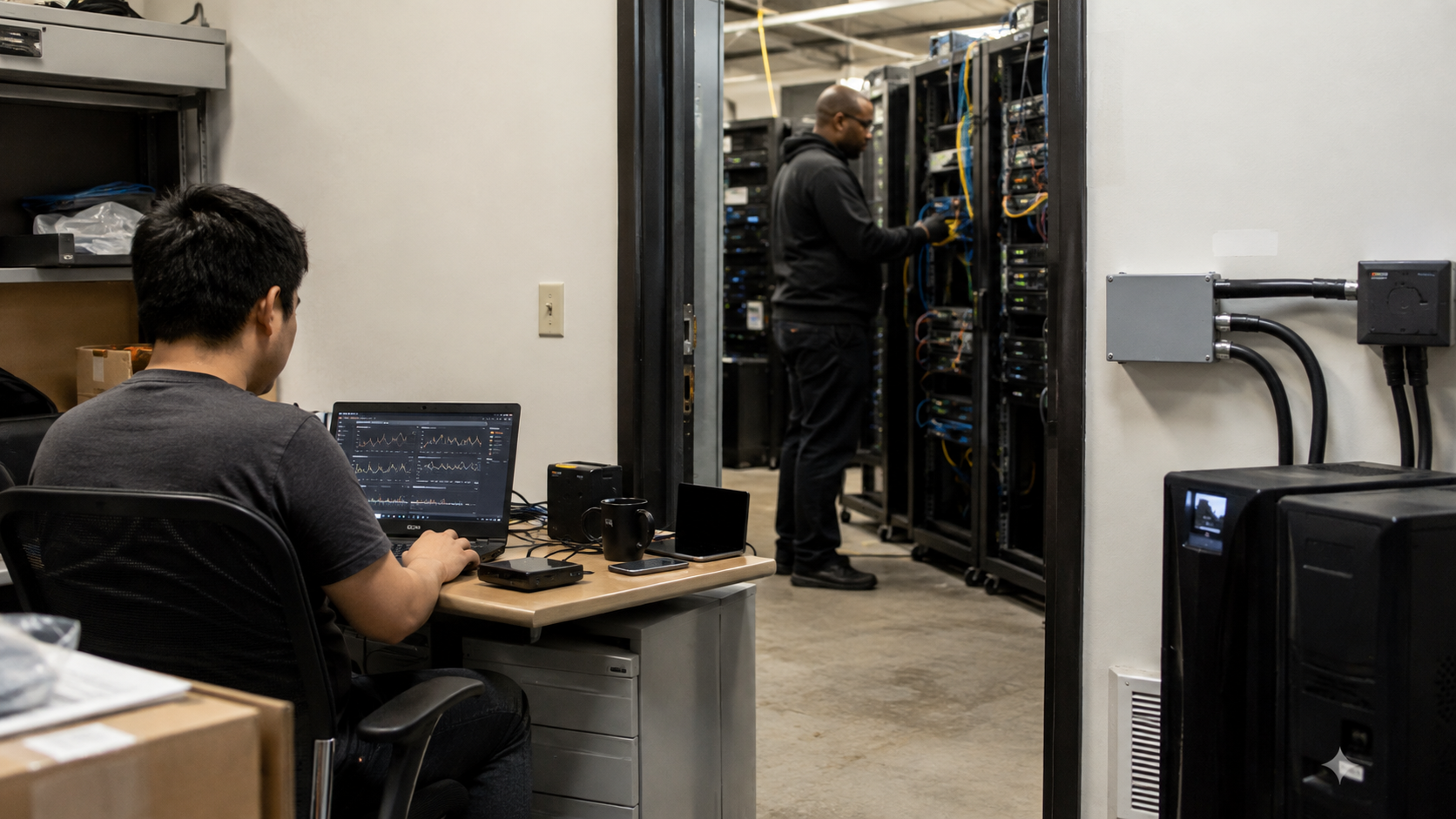
AI agent hosting cost is the total recurring monthly spend required to keep an autonomous AI agent operational in a live environment. The figure bundles five distinct categories: compute infrastructure, LLM API tokens, vector storage, monitoring, and security — and skipping any one of them produces a budget that can be off by 40% or more.
Compute infrastructure is the server capacity your agent runs on. Platforms like Modal, Railway, and Render charge an estimated $50-$200/month for a production agent handling moderate traffic, according to Fast.io’s 2026 hosting comparison. LLM API calls are the brain rental — every prompt and response burns tokens, and pricing scales directly with usage. A customer support agent handling 2,000 conversations a month might spend roughly $80 in tokens; a research agent chewing through long documents could approach $500.
Vector databases store the embeddings your agent uses for memory and retrieval. NoCodeFinder’s 2026 pricing guide reports storage costs of $0.02-$0.10 per GB monthly, which sounds trivial until a high-volume agent needs terabytes. Then there’s monitoring — observability tools that track latency, errors, and drift — plus the security layer for authentication and data handling.
Key Terms Defined
- Token: the unit LLM providers bill by — roughly ¾ of a word. Both your input (prompt) and the model’s output are counted, which is why long context windows quietly inflate cost.
- Embedding: a numeric vector representation of text stored in a vector database so an agent can retrieve relevant memory by similarity.
- Cold start: the latency penalty (often 200-500ms) when serverless compute spins up from idle to handle a request.
- Observability: tooling (e.g. LangSmith, Langfuse) that logs traces, latency, errors, and model drift in production.
The Five Cost Components Broken Down
AI agent deployment costs break down into five components, which together total roughly $80 to $1,010+ per month for most production systems as of 2026:
- Compute: $50-$200/month (Modal, Railway, Render) — hosts your agent’s runtime and orchestration.
- LLM tokens: $10-$500+/month (OpenAI, Anthropic, open-source models) — typically the largest variable cost, scaling with usage.
- Vector storage: $0-$60/month (Pinecone, Qdrant, pgvector) — stores embeddings for retrieval.
- Monitoring: $20-$150/month (LangSmith, Langfuse, custom dashboards) — tracks performance, latency, and errors.
- Security & authentication: $0-$100/month — varies by compliance requirements.
LLM tokens often consume the largest slice of the total budget at scale. Open-source models such as Llama 3 and Mistral can reduce token costs toward zero, shifting spend toward compute instead. A practical starting point is to use the free tiers offered by pgvector and Langfuse to minimize early-stage costs before scaling — both vendors’ pricing pages list those tiers.
For a realistic SME breakdown across departments, our AI ROI calculator models all five components against your projected savings.
How Much Does AI Agent Hosting Cost for a Small Business?

A small business should budget $200-$1,000 per month to host and operate a single production AI agent in 2026, according to Bakedwith’s cost analysis. The wide range reflects workload: a simple FAQ chatbot lands near the bottom, while a multi-tool agent that books appointments, queries databases, and drafts emails climbs toward the top.
Symphonize’s 2026 breakdown offers a concrete example: ongoing costs of roughly $5,000/month for hosting, monitoring, and improvements on a more sophisticated deployment, bringing year-one totals to around $110,000 once development is included. That figure scares most founders — but it describes a complex, custom-built system, not the lean single-purpose agent most SMEs actually need.
Here’s the part vendors bury: development cost and hosting cost are completely different animals. SoftTeco (June 2026) pegs development at $20,000 for a simple agent and $500,000+ for complex multi-agent systems. Hosting is the rent you pay forever after the build. A startup can spend $40,000 building a sales-qualification agent and then run it for $300/month — or overprovision and bleed $2,000/month on idle servers that sit empty at 3 a.m.
A Worked Example: Budgeting an FAQ Support Agent
Consider a typical implementation for a 12-person SaaS company replacing tier-1 support. Step by step, a practitioner would size it like this:
- Estimate volume: ~2,000 conversations/month, averaging 6 message turns each.
- Pick a model tier: route the bulk to a small, cheap model; reserve a frontier model only for escalations. Token spend lands near $40-$80/month.
- Choose hosting: traffic is business-hours-heavy, so serverless compute fits — budget ~$50/month rather than $150 for always-on.
- Add memory: a few hundred FAQ embeddings in pgvector’s free tier — effectively $0 until volume grows.
- Add observability: Langfuse free tier early, scaling to ~$30/month once live.
Total landing zone: roughly $120-$160/month — comfortably inside Bakedwith’s SME floor. The trade-off is cold-start latency on the first overnight request, which is acceptable for non-real-time support.
Realistic Monthly Budgets by Agent Type
| Agent Type | Compute | LLM Tokens | Total Monthly |
|---|---|---|---|
| FAQ / support chatbot | $50 | $10-$80 | $80-$200 |
| Sales qualification agent | $80 | $50-$200 | $200-$450 |
| Multi-tool workflow agent | $150 | $150-$500 | $400-$1,000 |
| Enterprise multi-agent system | $500+ | $1,000-$5,000+ | $3,200-$13,000 |
The enterprise tier comes from Azilen’s 2026 data showing post-launch costs of $3,200-$13,000/month. Most SMEs never need it — and a candid advisor should say so even when it means a smaller engagement. (The mid-tier figures are estimates synthesised from the compute and token ranges cited above; treat them as planning anchors, not quotes.)
Why Is Serverless vs Always-On Hosting the Biggest Cost Decision?
Choosing serverless over always-on hosting is the single largest lever on AI agent hosting cost, because it eliminates payment for idle compute. Serverless billing charges only when your agent is actively processing, which can substantially reduce infrastructure spend for workloads that aren’t busy 24/7.
Always-on hosting keeps a server running continuously, ready to respond instantly. That makes sense for an agent fielding constant traffic — a customer support bot for a global e-commerce brand, for instance. Serverless platforms like Modal spin compute up on demand and bill per second of execution. For a B2B sales agent that handles 50 conversations during business hours and zero overnight, serverless can mean the difference between roughly $40/month and $200/month.
Sybill’s 2026 analysis notes a third path: managed platforms where infrastructure is bundled into token pricing. Agents running through a managed LLM service’s web interface carry no separate server cost — you pay only for tokens. That’s the cheapest entry point for prototypes, but it sacrifices control and tends to get expensive at scale.
Decision Matrix: Which Hosting Model Fits Your Workload?
Hosting-model selection depends on three measurable factors: traffic variability, latency requirements, and monthly request volume.
- Choose serverless if: traffic is bursty or concentrated in business hours, typically under ~1 million requests/month. Cold-start latency (commonly 200-500ms) is acceptable for non-real-time use. Ideal for sales agents, internal tools, and seasonal workloads.
- Choose always-on if: you need sub-second response times and handle steady, high-volume traffic around the clock. Always-on eliminates cold starts and delivers consistent throughput for customer-facing support at scale.
- Choose managed/bundled if: you’re prototyping or running low volume and want zero infrastructure management — paying only for tokens as Sybill describes.
As a general rule of thumb, the break-even point sits somewhere in the low millions of monthly requests: below it, serverless usually wins on cost; above it, always-on wins on price-per-request and predictable performance. Run the comparison against your own volume rather than relying on a single threshold.
Practitioners commonly steer cost-conscious SME clients toward serverless or self-hosted n8n setups precisely because always-on hosting is the quiet origin of the ‘Zapier tax’ — paying premium recurring fees for capacity used a fraction of the time. Our n8n self-hosting guide shows how to run orchestration on a low-cost VPS instead.
What Hidden Costs Inflate Your AI Agent Hosting Cost?
Hidden costs typically add 30-50% on top of base hosting, and they’re the reason teams blow their AI agent hosting cost budgets within the first three months. The usual suspects: token cost spikes, vector database growth, monitoring tools, prompt tuning labor, and security compliance.
Token costs are the most deceptive. A model upgrade or a poorly engineered prompt can multiply your bill overnight. A common pattern practitioners see: a developer switches to a more powerful model ‘for quality’ without measuring whether the cheaper model already passed — and monthly LLM spend roughly quintuples for no measurable quality gain. NoCodeFinder’s 2026 guide flags professional monitoring and analytics tools as a frequently unbudgeted category — observability isn’t optional once an agent makes real business decisions.
Vector database growth sneaks up too. Storage starts at pennies per gigabyte, but agents that log every interaction for memory accumulate data fast. Maintenance is the quietest cost of all: prompt tuning, model evaluation, and security patching are recurring human labor, not one-time setup. Sybill’s 2026 numbers and Azilen’s $3,200-$13,000/month enterprise range both fold these maintenance hours into the total — because ignoring them produces a fantasy budget.
The Hidden Cost Checklist
- Token spikes: keep a buffer of roughly 50% and cap per-user model usage; routing simple queries to cheaper models meaningfully cuts inference cost. Stale embeddings and unmanaged context are common culprits.
- Vector storage creep: set retention policies and prune stale embeddings quarterly; unmanaged vector stores grow steadily as agents log every interaction.
- Monitoring tools: $20-$150/month for LangSmith or Langfuse — non-negotiable for production. Teams without observability spend far longer debugging failures.
- Prompt & model tuning: commonly 4-10 engineer hours/month on a maturing agent — often the largest hidden line item once you price the labor.
- Security & compliance: authentication, data encryption, and audit logging, scaling with your regulatory exposure.
Combined, these hidden costs frequently represent a large share of total operating expense — often rivalling raw API spend. Budget for them explicitly before launch, because reactive cost management after a production failure tends to cost several times the proactive investment. The guiding principle: the cheapest agent to run is the one that does exactly one job deterministically — sprawling, do-everything agents are where costs metastasize.
How Do You Calculate the True ROI Against AI Agent Hosting Cost?
True ROI on an AI agent is calculated by subtracting total annual hosting cost from the labor and revenue it generates, then dividing by that cost. A support agent costing $300/month ($3,600/year) that deflects a large share of tickets often saves several times its hosting cost in agent labor.
Symphonize’s 2026 case data is a clean illustration: an AI chatbot that deflects 60% of tickets means customers get answers without human intervention. If a support team handles 4,000 tickets monthly at an average loaded cost of $5 per human-handled ticket, deflecting 60% saves $12,000/month — against a hosting cost that might be $400. That’s a 30:1 return on that line, and it’s why ROI math, not infrastructure math, should drive the decision.
The mistake most founders make is anchoring on AI agent hosting cost in isolation. A $1,000/month agent looks expensive next to a $200 one — until you measure output. A $700/month sales-qualification agent that books a handful of extra qualified meetings, each worth thousands in pipeline, turns hosting cost into a rounding error.
The ROI Formula in Practice
AI agent ROI is calculated by dividing annual net value by annual cost. Four steps:
- Step 1: sum 12 months of hosting costs — compute, tokens, storage, and monitoring.
- Step 2: quantify monthly hours saved or revenue generated.
- Step 3: multiply hours saved by your loaded labor rate, then add new revenue.
- Step 4: apply ROI = (annual value − annual cost) ÷ annual cost × 100.
For example, an agent costing $6,000/year that saves 25 hours monthly at $60/hour generates $18,000 in annual value, yielding a 200% ROI. A positive ROI requires annual value to exceed annual cost; aim to validate that the value side is real and measurable before scaling. Run your own numbers with our AI agent total cost of ownership calculator, which models both development and 12-month operational spend in one view.
How Can SMEs Reduce AI Agent Hosting Cost Without Cutting Quality?
SMEs can cut AI agent hosting cost by an estimated 40-70% through model routing, serverless infrastructure, self-hosted orchestration, and aggressive scoping. The biggest savings come from matching model power to task difficulty — most queries don’t need a frontier model.
Model routing is the highest-leverage tactic. Route simple classification or FAQ queries to a small, cheap model and reserve expensive frontier models for genuinely hard reasoning. OpenAI and Anthropic both offer tiered model families specifically so you can do this — sending everything to the top model is like hiring a brain surgeon to apply bandages. Check each provider’s current pricing page, since per-token rates and model tiers change often.
Self-hosting orchestration cuts the recurring SaaS premium. Running n8n on a cheap VPS replaces per-task automation fees that scale brutally with volume. Caching repeated responses, batching requests, and trimming context windows all shave token costs. Deterministic agents are generally cheaper to run than open-ended probabilistic ones because they don’t waste tokens generating verbose, second-guessing output to appear helpful.
Actionable Cost-Cutting Playbook
- Route by complexity: cheap model for the bulk of queries, premium for the hard minority.
- Go serverless: stop paying for idle compute on bursty workloads.
- Self-host orchestration: replace the Zapier tax with n8n on a low-cost server.
- Cache aggressively: store common responses to skip redundant API calls.
- Trim context: shorter prompts cut token costs by an estimated 20-40%.
- Scope ruthlessly: one agent, one job. Resist feature sprawl.
Applied together, these steps can routinely take an SME’s hosting cost from the high hundreds per month to under $300 — with no measurable drop in output quality. Results vary with workload, so measure before and after rather than assuming a fixed percentage.
Key Takeaways and Your Next Move
AI agent hosting cost in 2026 is wildly variable by design, and that variability works in your favor if you control architecture. Small businesses should expect $200-$1,000/month per agent; the difference between the floor and ceiling is almost entirely workload pattern and hosting model, not magic.
Three decisions determine your bill: serverless versus always-on, model routing versus one-size-fits-all, and self-hosted orchestration versus SaaS premiums. Get those right and you’ll run a capable agent for the price of a software subscription. Get them wrong and you’ll fund idle servers and over-powered models for output a $50 agent could deliver.
Don’t anchor on hosting cost in isolation. A $700/month agent that deflects 60% of support tickets or books extra qualified meetings is a bargain. Measure output against spend, not spend against your fears — and verify every figure here against current vendor pricing before you commit a budget.
Frequently Asked Questions
How much does it cost to host an AI agent per month in 2026?
Hosting an AI agent costs an estimated $200-$1,000/month for most small businesses in 2026, according to Bakedwith. That covers $50-$200 in compute, $10-$500 in LLM tokens, and storage plus monitoring. Enterprise multi-agent systems run $3,200-$13,000/month per Azilen’s 2026 data. Confirm against live vendor pricing before budgeting.
Is serverless cheaper than always-on hosting for AI agents?
Serverless hosting is generally cheaper for bursty or business-hours workloads because you don’t pay for idle compute. Always-on hosting wins only when an agent handles steady, round-the-clock traffic needing instant response. Most SMEs save money with serverless or self-hosted setups.
What hidden costs increase AI agent hosting cost?
Hidden costs include token spikes, vector database growth, monitoring tools ($20-$150/month), prompt tuning labor, and security compliance. Together these commonly add 30-50% on top of base hosting, which is why many teams exceed their budget within the first quarter.
What’s the difference between AI agent development cost and hosting cost?
Development cost is the one-time build expense — $20,000 for simple agents to $500,000+ for complex systems, per SoftTeco’s 2026 data. Hosting cost is the recurring monthly rent to keep it running, typically $200-$1,000/month for SMEs. They are separate budgets.
How can a startup lower its AI agent hosting cost?
Startups can cut hosting cost by an estimated 40-70% by routing simple queries to cheaper models, using serverless infrastructure, self-hosting n8n for orchestration, caching responses, and trimming context windows. Scoping each agent to one clear job prevents the cost sprawl that breaks budgets.
Sources & References
- 10 Best AI Agent Hosting Platforms Compared (2026) — Fast.io (compute, token, and storage ranges)
- AI Agent Development Cost in 2026 — SoftTeco (published 9 June 2026; development cost ranges)
- AI Agent Pricing 2026: Complete Cost Guide & Calculator — NoCodeFinder (storage and monitoring costs)
- How Much Does an AI Agent Cost? 2026 — Bakedwith (SME monthly range)
- AI Agent Development Cost: Full Pricing Guide for 2026 — Azilen (enterprise $3,200-$13,000/month range)
- Costs of Building AI Agents — Symphonize (ongoing cost example and ticket-deflection figure)
- How Much Do AI Agents Cost to Run? 2026 — Sybill (managed/bundled pricing model)
- OpenAI (tiered model families for routing)
All figures above are estimates compiled from the dated, publicly available sources listed. This guide reflects general topical expertise in AI infrastructure and automation; it is not a substitute for verifying current pricing directly with each vendor.
Note: This article is for general informational purposes; verify specifics against your own context.
Hosting isn’t the only cost line item to watch — the new pricing policy for AI providers on the WhatsApp Business Platform means your messaging channel could soon eat into those savings if you don’t model token usage carefully.
If you’re trying to get a clearer picture of where your AI agent hosting costs are really going, we’d be happy to talk it through and help you spot the savings hiding in your setup. Reach out whenever you’re ready to dig into the numbers together.