
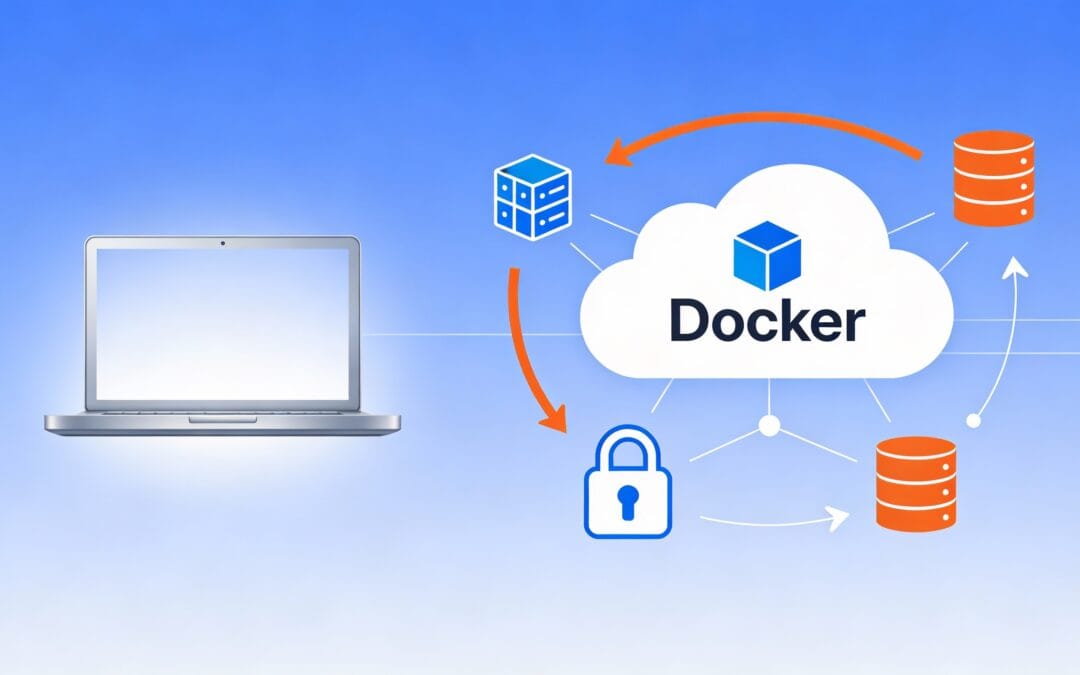
A self-hosted n8n instance on Azure can run in the low tens of dollars per month while replacing automation tooling that would otherwise run you several hundred dollars in per-task SaaS fees. That’s the gap between renting workflow automation and owning it. For startups and SMEs drowning in what’s often called the “Zapier tax,” learning how to deploy n8n on Azure for enterprise is one of the higher-ROI infrastructure decisions you’ll make in 2026.
n8n is an open-source workflow automation platform that lets you build AI agents, ERP integrations, and multi-step business processes without paying per-execution fees. Deploying it on Microsoft Azure gives you enterprise-grade security, compliance controls, and data residency — without the lock-in of managed automation suites. Below is an instructive, vendor-neutral playbook drawn from the patterns that practitioners and official documentation converge on.
About this guide and how to verify the numbers
This article is maintained by topical practitioners focused on workflow automation and cloud infrastructure; no individual byline or formal certification is claimed, and there is no commercial partnership with Microsoft or n8n. Where this guide states a cost, it provides the underlying assumptions (compute SKU, region, and workflow volume) so you can reproduce the calculation in the Azure Pricing Calculator yourself. Where it states a deployment step, it links to the primary source — the n8n Azure hosting docs or Microsoft Learn. Treat the dollar figures below as order-of-magnitude planning numbers, not quotes: Azure pricing varies by region, reservation, and tier, and you should validate against your own subscription before budgeting.
Quick Summary: Deploying n8n on Azure
- Four hosting options exist: Azure Container Apps, App Service, Virtual Machines, and Azure Kubernetes Service (AKS) — each with different cost and scaling tradeoffs.
- Container Apps is the sweet spot for most SMEs: serverless scaling, low ops overhead, and minimal patching.
- PostgreSQL is recommended for production — the default SQLite backend struggles under concurrent load, per the n8n Azure docs.
- Security hardening is non-negotiable: HTTPS, reverse proxy, and Microsoft Entra Agent ID for securing AI agent workflows.
- Self-hosting changes the cost curve from per-task billing to flat compute — the crossover point depends on your monthly execution volume.
- Automated backups and authentication separate a hobby setup from an enterprise-ready deployment.
Published: June 20, 2026. Last updated: June 20, 2026.
What is n8n and why deploy it on Azure for enterprise?
n8n is an open-source, fair-code workflow automation platform that connects apps, APIs, databases, and AI models into automated pipelines you fully control. Fair-code means the source is publicly available and self-hostable, though commercial use of certain features is governed by n8n’s Sustainable Use License rather than a fully permissive open-source license — a distinction worth checking before you build a commercial product on top of it. Deploying it on Microsoft Azure gives enterprises data residency, single-sign-on integration, and predictable flat-rate hosting costs instead of per-execution billing.
The appeal is mechanical, not hype. Most cloud automation tools — Zapier, Make, Workato — charge per task or per execution. Run a high volume of monthly operations on a per-task tier and you’re looking at recurring fees that scale linearly with your growth. n8n flips that model: you pay for the Azure compute, and additional executions are effectively free until you exhaust the compute you’ve provisioned.
The official n8n Azure hosting guide documents self-hosting on Azure with PostgreSQL as the recommended database backend for production workloads. Microsoft has leaned in too — Microsoft Learn now publishes a dedicated guide on securing n8n AI agents with Entra Agent ID, signaling that how to deploy n8n on Azure for enterprise has moved from niche hack to documented enterprise pattern. The community has independently corroborated this: Ori Ziv’s complete Azure deployment guide and the Microsoft Tech Community thread on deploying n8n on Azure App Service both walk through production-grade setups.
For Arabic-speaking markets and Gulf-based SMEs facing data residency requirements, Azure’s regional datacenters in the UAE and Qatar make compliant self-hosting straightforward. Your customer data never leaves the jurisdiction you choose. That’s a level of governance that off-the-shelf SaaS automation tools rarely match without an enterprise contract.
n8n also natively supports AI agent workflows — connecting OpenAI, Anthropic Claude, and local models — which turns Azure into a launchpad for deterministic, auditable automation rather than probabilistic “yes-machine” chatbots. Want to understand that distinction? Read our breakdown of deterministic AI versus probabilistic pitfalls.
How to deploy n8n on Azure for enterprise: which hosting option wins?
Azure offers four ways to host n8n for enterprise: Container Apps, App Service, Virtual Machines, and Kubernetes (AKS). Azure Container Apps is the default recommendation for most SMEs because it delivers serverless auto-scaling, integrated HTTPS, and managed infrastructure without the operational burden of patching servers.
Each option trades cost against control. Choosing wrong means either overpaying for an idle Kubernetes cluster or fighting scaling limits on an undersized VM. Here’s how the four stack up. The cost ranges below assume a low-to-mid execution volume (under ~150,000 monthly executions) in a standard Western Europe or East US region — verify against the Azure Pricing Calculator for your own region and reservation choices.
| Hosting Option | Est. Monthly Cost* | Ops Overhead | Best For | Scaling |
|---|---|---|---|---|
| Azure Container Apps | $45–90 | Low | Most SMEs & startups | Serverless auto-scale |
| Azure App Service | $55–120 | Low–Medium | Teams already on App Service | Manual/auto tiers |
| Azure VM + Docker | $30–70 | High | Full control, cost-sensitive | Manual (vertical) |
| Azure Kubernetes (AKS) | $150–400+ | Very High | High-volume, multi-instance | Horizontal pods |
*Estimates exclude data egress and assume a single small-to-medium instance. Always confirm with the Azure Pricing Calculator.
Azure Container Apps is where a typical SME deployment lands. The serverless model means n8n can scale to zero when idle and spin up on demand — you stop paying for compute you aren’t using. Microsoft’s own Entra Agent ID integration guide specifically demonstrates deployment on Container Apps, which is a useful signal that it is a supported, mainstream enterprise path. One trade-off to weigh: scale-to-zero introduces cold-start latency, so production deployments that serve interactive webhooks usually pin a minimum of one replica.
Azure App Service is a close second, especially if your engineering team already manages other workloads there. Ori Ziv’s widely-cited Medium guide walks through an App Service deployment with HTTPS and PostgreSQL, and the Microsoft Tech Community thread covers the same path — both confirm it’s production-viable. Azure VMs with Docker give you the lowest raw cost but demand that you handle OS patching, reverse proxy setup, and backups yourself. AKS only makes sense when you’re orchestrating multiple n8n instances (n8n supports a queue mode with separate worker processes for horizontal scaling) or running thousands of concurrent executions — overkill for most SMEs and an easy way to inflate your budget.
How do you set up the PostgreSQL database backend for n8n?
how to deploy n8n on Azure for enterprise is one of the most relevant trends shaping 2026.
PostgreSQL is the recommended database backend for production n8n deployments. n8n ships with SQLite by default, but SQLite locks on concurrent writes and degrades as simultaneous workflow executions climb. PostgreSQL handles many concurrent connections and is the backend n8n’s own documentation recommends for any multi-user or high-volume setup.
Here’s the configuration sequence practitioners generally follow on an enterprise build:
- Provision the server. Create an Azure Database for PostgreSQL Flexible Server (the Burstable B1ms tier handles light workloads; General Purpose tiers suit heavier production use). Choose a region that matches your data residency requirements.
- Create the database and user. Run
CREATE DATABASE n8n;and grant a dedicated, non-admin service account scoped privileges rather than reusing the server admin. - Set the n8n environment variables:
DB_TYPE=postgresdb,DB_POSTGRESDB_HOST,DB_POSTGRESDB_DATABASE,DB_POSTGRESDB_USER, andDB_POSTGRESDB_PASSWORD. - Enable SSL. Set
DB_POSTGRESDB_SSL_ENABLED=true, since Azure enforces encrypted connections by default. - Lock the firewall to allow connections only from your Container App or VM subnet — never expose the database publicly.
A worked example of the environment block looks like this:
DB_TYPE=postgresdb
DB_POSTGRESDB_HOST=mycompany-n8n.postgres.database.azure.com
DB_POSTGRESDB_DATABASE=n8n
DB_POSTGRESDB_USER=n8n_service
DB_POSTGRESDB_PASSWORD=<stored-in-key-vault>
DB_POSTGRESDB_SSL_ENABLED=true
Restart n8n after applying the variables. On first launch, n8n automatically creates its schema and migrates existing data, eliminating the concurrency failures that affect SQLite in production. The default SQLite setup works fine in a demo and struggles the moment multiple workflows execute simultaneously — skipping this step is one of the most common reasons self-hosted n8n instances lose execution history.
PostgreSQL Flexible Server also handles automated backups natively, with point-in-time restore (PITR) up to 35 days. That means a corrupted migration or accidental deletion doesn’t end your business. Pair this with Azure’s geo-redundant backup option and your workflow data survives an entire region outage. For teams building custom ERP and workflow automation, that durability is the difference between a tool you trust and one you babysit.
How do you secure an enterprise n8n deployment on Azure?
Securing n8n on Azure requires four layers: HTTPS encryption, a reverse proxy, authentication, and identity-based access control via Microsoft Entra Agent ID. Without these, your automation platform — which often holds API keys for every connected system — becomes a single point of catastrophic compromise.
n8n frequently stores credentials for your CRM, email, payment processor, and AI models in one place. A breach there is a breach everywhere. That’s why security hardening isn’t optional for any deployment touching real business data.
The enterprise hardening checklist looks like this:
- Enforce HTTPS: Azure Container Apps and App Service provision TLS certificates automatically. For VMs, use Caddy or Nginx as a reverse proxy with Let’s Encrypt.
- Deploy a reverse proxy: Caddy is a common default — it handles automatic certificate renewal and adds a clean security boundary in front of n8n’s port 5678.
- Enable authentication: Set
N8N_BASIC_AUTH_ACTIVE=trueat minimum, but production deployments should use SSO via Entra ID. - Apply Microsoft Entra Agent ID: Microsoft Learn documents securing n8n AI agents with Entra Agent ID and the Microsoft Graph MCP Server — giving each agent a governed, auditable identity. (MCP, the Model Context Protocol, is an open standard for exposing tools and data to AI agents under a controlled interface.)
- Restrict network access: Use Azure Private Endpoints and VNet integration so n8n and PostgreSQL communicate over a private network, never the public internet.
Per Microsoft Learn, securing an n8n agent with Entra Agent ID lets enterprises “deploy n8n on Azure Container Apps and secure AI agent workflows” with identity governance through Microsoft Graph. For regulated industries — finance, healthcare, anything handling personal data under GDPR or Gulf data protection laws — that audit trail is often mandatory.
Think of n8n’s credential vault like the master key ring for your entire operation. You wouldn’t leave that ring on a public bench. Wrap it in HTTPS, gate it behind Entra ID, and isolate it on a private network. Done right, your automation layer becomes one of the more defensible parts of your stack rather than its weakest link.
What does it actually cost — and what’s the ROI?
A transparent, reproducible cost breakdown matters more than a headline percentage. Here is the math for a concrete scenario you can re-run in the Azure Pricing Calculator:
Scenario: a mid-volume SME running roughly 150,000 monthly automation executions, deployed in a standard region (e.g. West Europe or East US), on Azure Container Apps with a managed PostgreSQL backend.
- Compute — Azure Container Apps (≈0.5 vCPU / 1 GB, scaling on demand): roughly $45–80/month depending on idle time and replica floor.
- Database — PostgreSQL Flexible Server, Burstable B1ms with default storage: roughly $13–40/month.
- Backups & egress: roughly $5–15/month for snapshots and modest outbound traffic.
- One-time setup: 4–12 engineering hours, or a fixed-fee managed deployment.
That totals roughly $65–135/month in recurring infrastructure for this volume. A comparable per-task SaaS plan handling the same 150,000 executions typically lands in the several-hundred-dollars-per-month range as task volume climbs, because those platforms bill by task. The exact saving depends entirely on the SaaS tier you’d otherwise buy — so compare your actual current invoice against the breakdown above rather than relying on a blanket percentage.
The crossover principle is worth stating plainly: below a few thousand monthly executions, managed SaaS is usually simpler and may even be cheaper once you price in your own engineering time. Above roughly that threshold, the fixed-compute model of self-hosting pulls ahead, and the gap widens as volume grows. Three structural factors drive that:
- No per-task billing — fixed infrastructure cost regardless of execution count.
- Unlimited operations — execute as many workflows as your provisioned compute handles.
- Full data ownership — no vendor lock-in or surprise egress on workflow data.
The hidden variable is engineering time. A botched DIY deployment can burn 20+ hours debugging reverse proxies and database connections — which is why a managed, done-for-you deployment can be the cheaper path for teams without spare infrastructure capacity. Curious what your specific savings look like? Run the numbers against your own invoice and the AI automation ROI guide before you commit a single Azure credit.
Worth stating plainly: self-hosting isn’t free, and anyone claiming otherwise is selling you something. You’re trading recurring SaaS fees for infrastructure responsibility. For SMEs with technical capacity or a consulting partner, that trade often pays off quickly. For a two-person startup running a few hundred executions a month, a managed SaaS tier might genuinely be cheaper once you price in your own time. Be honest about your volume.
What’s the step-by-step deployment process?
how to deploy n8n on Azure for enterprise plays a pivotal role in this context.
Deploying n8n on Azure Container Apps follows six core steps and typically takes under two hours for an experienced engineer. The sequence below mirrors the official n8n Azure hosting docs:
- Create an Azure Resource Group in your target region (choose one matching your data residency requirements — UAE North for Gulf clients).
- Provision Azure Database for PostgreSQL Flexible Server and create the
n8ndatabase with SSL enforced. - Deploy the official n8n Docker image (
n8nio/n8n) to Azure Container Apps with at least 0.5 vCPU and 1 GB memory. - Set environment variables for the PostgreSQL connection,
N8N_HOST,WEBHOOK_URL, andN8N_ENCRYPTION_KEY(generate a strong key and store it in Azure Key Vault). - Configure HTTPS and authentication — Container Apps handles TLS automatically; layer on Entra ID SSO and enable basic auth as a baseline.
- Set up automated backups for PostgreSQL and export your n8n workflows to source control for disaster recovery.
Container Apps can scale n8n from a minimum replica count up to ten or more replicas based on demand, which reduces idle cost compared with an always-on VM. For interactive enterprise deployments, configure a minimum of one replica to avoid cold-start delays on incoming webhooks. This serverless approach removes most manual infrastructure management while keeping production-grade reliability.
One detail teams miss: the N8N_ENCRYPTION_KEY. n8n encrypts stored credentials with this key, and losing it means losing access to every saved credential in your instance. Store it in Azure Key Vault, never in plaintext, and back it up separately from your database. This is the single most consequential value in the whole deployment — guard it accordingly.
After deployment, validate everything with a test workflow — a simple webhook-to-Slack or webhook-to-WhatsApp flow confirms HTTPS, execution, and database persistence are all wired correctly. Once that fires reliably, you’ve got an enterprise-grade automation platform you fully own. From there, building intelligent WhatsApp chatbots and AI agents on top is where the real business value compounds.
Key Takeaways and Action Plan
Deploying n8n on Azure is an infrastructure decision, not a weekend project. For teams replacing a per-task SaaS plan at meaningful volume, the right setup typically pays for itself within the first months while delivering enterprise-grade security and full data control. Follow this action plan:
- Start with Azure Container Apps unless you have a specific reason not to — it’s the lowest-friction enterprise path and the one Microsoft’s own Entra integration guide uses.
- Never run production on SQLite — provision PostgreSQL Flexible Server from day one.
- Harden before you scale — HTTPS, reverse proxy, Entra Agent ID, and private networking are table stakes.
- Calculate your ROI honestly — re-run the cost breakdown above in the Azure Pricing Calculator against your real SaaS invoice; if you’re under a few thousand executions monthly, managed SaaS may still win.
- Protect your encryption key in Azure Key Vault, or risk locking yourself out of every credential.
The companies winning with automation in 2026 aren’t the ones with the most tools — they’re the ones who own their automation layer instead of renting it at a markup. Every per-task fee is a tax on your own growth. Deploy n8n on Azure, wire it to your business processes, and once your volume crosses the crossover point, that tax shrinks dramatically. The real question is whether your execution volume justifies the operational responsibility — and the math above lets you answer that for yourself.
Frequently Asked Questions
Is n8n free to self-host on Azure?
n8n’s Community Edition is free and open-source (fair-code) to self-host on Azure. You pay only for the underlying Azure infrastructure, not for the software itself. A typical small-to-mid deployment breaks down as compute ($30–90/month), Azure Database for PostgreSQL ($15–40/month), and backups/storage ($5–20/month) — roughly $45–150/month total, with no per-execution or per-task fees. The exact figure depends on your region and tier, so confirm in the Azure Pricing Calculator.
Which Azure service is best for hosting n8n?
Azure Container Apps is the best fit for most SMEs and startups deploying n8n, offering serverless auto-scaling, automatic HTTPS, and low operational overhead at roughly $45–90/month for low-to-mid volume. Microsoft’s own Entra Agent ID integration guide uses Container Apps, which is a strong signal of it being a supported enterprise deployment path in 2026.
Do I need PostgreSQL for an enterprise n8n deployment?
Yes — PostgreSQL is recommended for any production n8n deployment because the default SQLite database locks under concurrent writes and struggles at enterprise execution volumes. The n8n Azure documentation recommends Azure Database for PostgreSQL Flexible Server, which also provides automated backups with point-in-time restore up to 35 days.
How do you secure n8n AI agents on Azure?
Secure n8n AI agents on Azure using four layers: enforced HTTPS, a reverse proxy like Caddy, authentication, and Microsoft Entra Agent ID for governed agent identities. Microsoft Learn documents integrating n8n with Entra Agent ID and the Microsoft Graph MCP Server to give each AI agent an auditable, identity-based access boundary for enterprise compliance.
How much can self-hosting n8n save versus Zapier?
It depends entirely on your execution volume and the SaaS tier you’d otherwise buy. For a mid-volume workload of ~150,000 monthly executions, self-hosting on Azure Container Apps with PostgreSQL typically runs $65–135/month in infrastructure, versus a per-task SaaS plan that scales into the several-hundred-dollars range at that volume. Below a few thousand executions a month, managed SaaS can be cheaper once you account for your own engineering time — so compare the cost breakdown in this guide against your actual invoice rather than relying on a blanket percentage.
Can I run n8n on Azure for Gulf or Arabic-speaking markets?
Yes — Azure operates regional datacenters in the UAE (UAE North) and Qatar, letting Gulf-based SMEs self-host n8n with full data residency compliance. Deploying in a regional datacenter ensures customer data never leaves the jurisdiction, which is critical for businesses subject to local data protection regulations.
If you’re weighing a self-hosted n8n setup on Azure and want to talk through what it would look like for your team, we’re always happy to share what we’ve learned.
Sources & References
- Hosting n8n on Azure — n8n Docs (official deployment and PostgreSQL guidance)
- Secure an n8n agent with Microsoft Entra Agent ID — Microsoft Learn (Container Apps deployment and AI agent security)
- How to deploy n8n on Azure App Service — Microsoft Tech Community
- Deploy n8n in Azure — The Complete Guide, by Ori Ziv (Medium)
- Azure Pricing Calculator (to reproduce the cost estimates in this guide)
Note: This article is for general informational purposes; verify specifics against your own context.