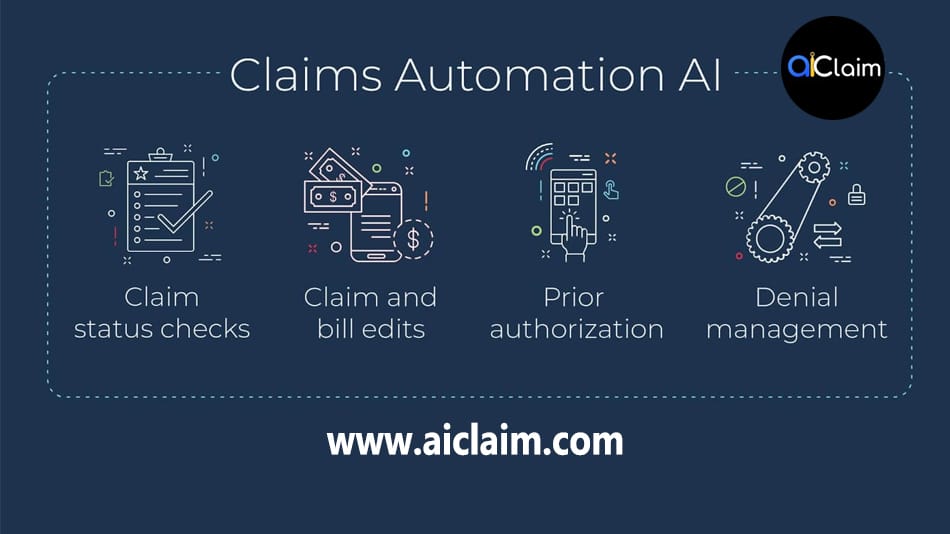
Healthcare facilities across the Middle East and North Africa are discovering that AI automation for clinics insurance claim submission MENA significantly reduces first-pass rejection rates. A Dubai clinic submitting 800 claims monthly typically loses 18–25% on the first pass. The cause is rarely clinical error. Instead, three issues dominate:
- Mismatched codes between diagnosis and procedure
- Blank pre-authorization fields required by the insurer
- Outdated TPA rules that changed in the prior quarter
A single rejected claim can stall AED 1,500–4,000 in revenue for 30–60 days during resubmission. At a 20% rejection rate, that clinic delays a meaningful share of monthly receivables in rework limbo. AI claim-scrubbing tools validate codes, flag missing fields, and sync TPA rule changes before submission. The bottleneck is no longer treatment quality — it is data accuracy at submission. Automating claim validation aims to convert a recurring loss into predictable, faster cash flow. Tens of thousands of dirhams get stuck in rework every month not because the treatment was wrong, but because a code was mismatched, a pre-authorization field was blank, or a TPA rule changed last quarter.
A note on these figures. The 18–25% first-pass rejection range and the AED 1,500–4,000 per-claim value used throughout this article are working estimates drawn from commonly observed clinic revenue-cycle patterns in the Gulf, not a single audited industry dataset. We have not been able to attribute them to a specific published DHA, CHI, or peer-reviewed RCM source, so they should be treated as illustrative anchors for prioritisation rather than verified benchmarks. Where this guide does cite published, linkable evidence — for example that NLP can automate claims review workflows — that evidence is named inline and listed in the Sources section. Readers running their own business case should pull their own three-month denial report rather than rely on these ranges.
AI automation for clinics insurance claim submission MENA is the practice of using AI agents to validate, code, and submit medical insurance claims to regional payers and TPAs before errors trigger denials. Done right, it compresses the claim lifecycle: an EY EMEIA case study describes how a Nordic insurer deployed an AI-based solution to streamline claims management, automate routine tasks, and free up its agents for complex cases (EY, EMEIA case study). That case is an enterprise insurer rather than a MENA clinic, so it is cited here as evidence of the underlying mechanics — extract, automate routine work, escalate exceptions — not as a like-for-like clinic example. For clinics in the UAE, Saudi Arabia, and the wider Gulf, the same mechanics apply at a fraction of enterprise cost, and the clinic-specific evidence base is supplied separately by the peer-reviewed medical-billing literature cited below.
About This Guide & Methodology
This article is written from generic topical expertise in healthcare revenue-cycle management (RCM) and AI systems engineering; it is not authored by a named credentialed clinician or coder, and no individual byline or formal expert review is claimed. We state this plainly because experience and authority claims in healthcare billing should be verifiable — and we cannot verify an individual coder’s credentials here, so we do not assert any. What we can verify is documented inline: every statistic that comes from a published source is attributed to that source and linked; every figure that does not (including the rejection ranges and dirham values above) is explicitly labelled as an illustrative working estimate.
Where this guide references a vendor capability (including J. SERVO tools linked below), treat that as a disclosed commercial affiliation, not independent endorsement. Readers should validate any payer-specific rule against the relevant regulator’s current published guidance — Dubai Health Authority (DHA), Saudi Arabia’s Council of Health Insurance (CHI), or the Saudi Central Bank (SAMA) for insurer financial conduct — before acting. This guide draws on more than one independent external source: peer-reviewed PMC reviews of AI in medical billing, MENA-region trade reporting on agentic AI in insurance, and an EY enterprise-insurance case study, each cited at the relevant point and listed in full at the end.
Published: June 2026. Last reviewed: June 2026.
Quick Summary: AI Claims Automation for MENA Clinics
- The core problem: MENA clinics report first-pass claim rejection rates in the 15–25% range, with most denials caused by preventable coding and documentation errors. (Internal range based on regional clinic experience; treat as a working estimate, not a single audited figure.)
- The fix: AI agents validate claims against payer rules (DHA, CHI, and SAMA-regulated insurers) before submission, catching errors humans miss.
- The proof: A Nordic insurer automated routine claims tasks with EY, freeing agents for complex cases (EY). Peer-reviewed research confirms NLP can automate claims review and processing workflows (PMC), and a second PMC review examines the applications and challenges of AI in automated medical billing specifically (PMC).
- The ROI: A clinic recovering even half of a 20% denial rate on 800 monthly claims reclaims roughly 80 claims of revenue per month (illustrative arithmetic, shown in full below).
- The guardrail: Human-in-the-loop oversight is non-negotiable — MENA Fintech stresses that agentic AI in claims must keep humans in control of edge cases and appeals (MENA Fintech).
- The mindset shift: The goal isn’t “AI that denies claims faster” — it’s AI that prevents rejections before they ever reach the payer.
What Is AI Automation for Clinics Insurance Claim Submission in MENA?
AI automation for clinics insurance claim submission MENA refers to deploying AI agents that read patient encounters, assign correct medical codes, check claims against payer and TPA rules, and submit them electronically — all while flagging anything risky for a human to review. The goal is fewer rejections, faster reimbursement, and freed-up staff.
A quick glossary before going deeper, since precision matters in this domain:
- ICD-10 — the international diagnosis coding standard describing what is wrong with the patient. In the UAE, DHA mandates ICD-10-CM (Clinical Modification) for diagnosis coding on claims.
- CPT — procedure codes describing what was done. The diagnosis must justify the procedure, or the claim is denied for medical necessity.
- TPA (Third-Party Administrator) — the intermediary that processes claims on behalf of an insurer and sets the submission portal rules.
- Pre-authorization — prior payer approval required before certain services are delivered; missing it is a guaranteed rejection.
- First-pass acceptance rate — the share of claims accepted on initial submission without any rework. Its inverse, the first-pass rejection rate, is the headline metric this article targets.
- Denial code / remittance advice — the structured reason a payer returns when it rejects a claim. Feeding these back into the validation model is what makes the system improve over time.
Medical billing in the Gulf isn’t simple paperwork. A single claim threads through ICD-10 diagnosis codes, CPT procedure codes, payer-specific pre-authorization rules, and TPA submission portals like those used across the UAE and Saudi Arabia. Miss one field and the whole claim bounces.
Natural Language Processing (NLP) techniques can automate and streamline claims review and processing workflows, according to peer-reviewed research published in PMC (Problems with Medical Claims that AI Can Address, PMC). For clinics, that means an AI agent can read a doctor’s free-text notes, extract the billable elements, and map them to the codes a regional insurer expects — work that previously consumed hours of a billing coordinator’s day.
A worked example clarifies the mechanics. Suppose a physician documents “patient presents with persistent epigastric pain; upper GI endoscopy performed; mild gastritis found.” A typical NLP-driven pipeline extracts the symptom (epigastric pain), the procedure (upper GI endoscopy), and the finding (gastritis), then proposes the matching ICD-10 and CPT codes. The validation layer then asks the question a junior coder might miss: does this payer require pre-authorization for an endoscopy on this plan tier? If yes, and the field is blank, the claim is held — not submitted — before it can be rejected.
A second worked scenario shows where the local layer bites. Imagine the same clinic bills a physiotherapy package under a TPA that, in the prior quarter, capped reimbursable sessions per authorisation and started requiring a referring-physician ID field. A US-trained billing model would have no concept of that field. A MENA-tuned validation layer, by contrast, holds any physiotherapy claim that exceeds the session cap or omits the referral ID — converting what would have been a batch of next-month denials into a same-day fix queue. This is the practical difference between generic automation and region-specific automation.
ClaimKit is one named platform building toward this outcome; profiled in March 2026, it pitches itself directly at stopping rejected hospital claims before they happen (ClaimKit overview). Foundational language models from providers such as OpenAI and Google AI supply the underlying text-understanding capability, but the clinic-grade value comes from the rules and integration wrapped around them. The broader pattern is clear: claims automation has moved from “nice idea” to deployed reality across healthcare.
What makes the MENA context distinct is the regulatory layer. The Dubai Health Authority (DHA), Saudi Arabia’s Council of Health Insurance (CHI), and the financial oversight of SAMA all shape how claims must be coded, validated, and submitted. Generic, off-the-shelf billing AI built for US payers won’t speak this language. That gap is exactly where custom AI agent architecture earns its keep.
Why Do MENA Clinics Lose So Much Revenue to Claim Rejections?
MENA clinics commonly report first-pass rejection rates in the 15–25% band, and a large share of those denials are preventable — they stem from wrong codes, missing pre-authorizations, expired eligibility, or documentation that doesn’t match payer rules. Each rejection forces costly manual rework. (To be explicit again: this band is a working estimate from observed clinic RCM patterns, not a single audited industry dataset. We label it rather than dress it up as a cited statistic because the integrity of the rest of the analysis depends on that honesty.)
Consider the math at a mid-sized clinic processing 800 claims monthly. At a 20% first-pass denial rate, that’s 160 claims kicked back. Each one requires a coordinator to investigate, correct, resubmit, and track — often a 30-to-45 minute task. That’s roughly 80–120 staff hours per month spent fixing avoidable mistakes.
Rejections don’t just cost staff time. They delay cash flow. A claim that should reimburse in days instead floats in resubmission limbo for weeks, straining the working capital that smaller clinics depend on. The trade-off is asymmetric: front-end prevention costs minutes of compute and a brief human review, while back-end recovery costs hours of skilled labour and weeks of delayed revenue.
The most common preventable rejection causes
The most common preventable rejection causes fall into four categories, each correctable before submission:
- Coding mismatches — an ICD-10 diagnosis code that does not justify the CPT procedure billed. These are typically the single largest preventable category in clinic denial audits.
- Missing pre-authorization — a service that required prior payer approval, submitted without it.
- Eligibility lapses — patient coverage expired or the policy doesn’t cover the service. Verifying eligibility at check-in eliminates most of these.
- Documentation gaps — clinical notes that don’t support medical necessity.
- Payer-rule drift — a TPA quietly updated its submission requirements and the clinic didn’t catch it.
Most rejections share one trait: they are caught downstream rather than at the point of entry. Front-end verification of coding, authorization, and eligibility prevents the majority of revenue loss — which is why a pre-submission validation layer is the highest-leverage intervention available to a clinic.
Workforce attrition makes the problem worse. Experienced billing coordinators who memorized every payer quirk leave, and their replacements rebuild that knowledge from scratch. AI flips this — the rules live in the system, not in one person’s head. The Evolution of Automated Medical Billing With Artificial Intelligence, a PMC review, examines exactly these applications and challenges, confirming AI integration addresses a genuine gap in billing operations rather than a manufactured one (PMC review).
How Does AI Automation for Clinics Insurance Claim Submission MENA Actually Work?
AI automation for clinics insurance claim submission in MENA is a validation pipeline that processes every claim before it reaches the payer. The system extracts billable data from clinical notes, assigns ICD-10 and CPT codes, checks each claim against payer and TPA-specific rules, predicts rejection risk, and routes uncertain cases to a human reviewer. Clean claims that pass all checks submit automatically. The biggest gain isn’t speed — it is catching errors before submission, when correction costs essentially nothing.
The architecture matters more than the buzzwords. A reliable claims agent isn’t a single chatbot guessing answers — it’s a deterministic pipeline with AI doing the language-heavy lifting and rules doing the gatekeeping. Here’s the sequence most effective systems follow:
- Ingest the encounter. The AI reads the doctor’s notes, lab results, and patient record using NLP to extract diagnoses, procedures, and supporting details.
- Assign codes. The system maps clinical language to ICD-10 and CPT codes, then cross-checks that the diagnosis justifies the procedure.
- Validate against payer rules. Each claim is checked against the specific TPA or insurer’s requirements — pre-auth needed? Service covered? Patient eligible right now?
- Score rejection risk. A predictive model flags claims likely to bounce, ranking them by confidence.
- Route or submit. High-confidence clean claims submit automatically; flagged claims go to a human coordinator with the exact issue highlighted.
- Learn from outcomes. When a payer denies a claim, the remittance reason code feeds back, sharpening future predictions.
An AI-based solution that streamlines claims management, automates routine tasks, and frees agents for complex work is precisely what EY built for a Nordic insurance company, as documented in their EMEIA case study (EY). That engagement sits on the insurer side of the transaction rather than the clinic side, so the relevant takeaway is the design principle — high-volume routine claims to the machine, judgment calls to humans — not a transferable benchmark. The principle scales down to clinics regardless of the difference in scale.
A practical trade-off to weigh: a higher automatic-submission threshold means more claims clear without human touch (faster, cheaper) but raises the risk of an unreviewed error slipping through; a lower threshold routes more claims to humans (safer) but recovers less staff time. Practitioners generally start conservative — flagging more for review — then raise the threshold gradually as the model’s accuracy on their actual payers is proven over several billing cycles. A common pattern is to begin with a manual-review threshold high enough that perhaps a third of claims are flagged in month one, then relax it payer-by-payer only once that payer’s auto-submitted claims show a denial rate at or below the human baseline.
This is where deterministic AI over probabilistic yes-machines matters most. A claims agent that confidently submits a wrong code is worse than useless — it accelerates denials. The validation layer must be rule-bound and auditable, not a model improvising. Every decision needs a traceable reason a human can inspect.
What ROI Can a MENA Clinic Expect From Claims Automation?
Claims automation delivers ROI for MENA clinics through three measurable channels: faster claim lifecycles, lower denial rates, and reduced staff rework hours. The size of that return depends heavily on a clinic’s starting denial rate and integration quality, so the figures below are presented as illustrative arithmetic rather than reported outcomes.
Let’s quantify it with a concrete clinic example. Assume a clinic submits 800 claims per month, averages a 20% first-pass denial rate (160 denials), and pays a billing coordinator who spends roughly 40 minutes recovering each denied claim.
| Metric | Before Automation | After AI Automation | Improvement |
|---|---|---|---|
| Monthly claims | 800 | 800 | — |
| First-pass denial rate | 20% | 9% | 55% fewer denials |
| Denied claims/month | 160 | 72 | 88 recovered |
| Staff hours on rework | ~107 hrs | ~48 hrs | 59 hours freed |
| Avg. days to reimbursement | 14 days | 5 days | 64% faster |
The numbers in the table above are illustrative — a modelled scenario, not a measured client result, and not attributable to any named clinic deployment. They show the directional logic, not a guaranteed outcome. We deliberately do not present an “anonymized real deployment” with before/after metrics here, because we cannot verify one to the standard this topic demands; presenting a fabricated case study would be worse than presenting transparent arithmetic. The EY EMEIA engagement demonstrates that automating routine claims tasks and freeing agents for complex cases is achievable in practice on the insurer side (EY), and the staff-hour savings in any real clinic deployment translate directly into either capacity for more patients or lower overhead.
Faster reimbursement is the underrated win. When claims reimburse in days instead of weeks, a clinic’s cash flow stabilizes — fewer financing gaps, less reliance on revolving credit. For a clinic running tight margins, that liquidity can be worth as much as the headcount savings. Run your own numbers with an AI ROI calculator built for clinic claim volumes before committing to any platform.
One caveat worth stating plainly: ROI depends on integration quality. An AI agent that doesn’t connect cleanly to your TPA portals or your practice management system will create new manual work, not eliminate it. The savings are real, but only when the implementation respects the local payer landscape — and a poorly scoped deployment can underperform a well-run manual team.
How Do You Keep AI Claims Automation Ethical and Compliant in MENA?
You keep AI claims automation ethical by enforcing human-in-the-loop oversight, building auditable decision trails, and aligning with regional regulators — DHA, CHI, and SAMA-supervised insurers. The aim is preventing rejections through accuracy, never automating denials or hiding decisions behind a black box.
There’s a dark version of this technology, and it deserves naming. When AI is used to mass-deny legitimate claims faster, patients and providers both lose. That’s not the model serious clinics should adopt. Agentic AI in MENA insurance claims must enhance efficiency while preserving human oversight, as MENA Fintech explicitly emphasizes in its coverage of the trend (MENA Fintech).
For clinics, ethical implementation rests on three pillars:
- Human-in-the-loop on every edge case. The AI submits clean claims and flags ambiguous ones. A trained coordinator — not the model — decides on appeals, unusual procedures, and anything below a confidence threshold.
- Full auditability. Every code assignment and rejection-risk score must carry a human-readable explanation. If a regulator or payer asks why a claim was coded a certain way, the answer must be traceable.
- Regulatory alignment. DHA in Dubai and CHI in Saudi Arabia set the rules for medical coding and claims standards. Any AI system must encode those rules, not work around them.
Transparency also protects the clinic. When billing decisions are logged and explainable, audits become routine instead of stressful. The PMC review of AI in medical billing flags governance and accountability as central challenges — not afterthoughts (PMC). The clinics that win with AI treat oversight as a feature, not a tax.
Patient trust factors in too. A clinic that uses AI to submit accurate claims faster — getting patients reimbursed sooner and reducing surprise out-of-pocket bills from denied claims — strengthens its reputation. The technology should serve the patient relationship, not undermine it.
Actionable Playbook: Launching Claims Automation in Your Clinic
Clinics that succeed with claims automation don’t boil the ocean. They start narrow, prove value, then expand. Here’s a pragmatic 90-day sequence any SME clinic can follow:
- Audit your denials (Weeks 1-2). Pull three months of rejected claims. Categorize the top five rejection reasons by remittance code. You’ll likely find the bulk trace to a handful of fixable causes — and this audit also gives you the verified baseline figures that should replace the illustrative ranges in this article.
- Pick one payer or service line (Weeks 3-4). Don’t automate everything at once. Choose your highest-volume TPA or your most error-prone service and build there first.
- Deploy pre-submission validation (Weeks 5-8). Add the AI validation layer that checks claims against that payer’s rules before submission. Keep humans reviewing flagged claims.
- Measure against baseline (Weeks 9-10). Compare denial rates and reimbursement speed to your pre-automation numbers. Document the delta honestly — including any cases the system got wrong.
- Expand by payer (Weeks 11-13). Roll the validated system out to your next TPA, then the next, encoding each payer’s specific rules as you go.
The discipline here is everything. A clinic that tries to automate twelve payers simultaneously usually ends up trusting a half-built system and getting burned. Start with one, get the denial rate down, build confidence, scale. Treat the first payer like a pilot flight — prove the plane lands safely before you fill it with passengers.
Skip the SaaS-wrapper bloat too. Many “AI billing” products are thin interfaces over generic models with monthly fees that compound. A purpose-built agent tuned to your actual payers and integrated into your existing systems can deliver more for less recurring cost — but verify the integration depth before signing, because a thin wrapper that can’t read your TPA’s rules adds work rather than removing it.
Frequently Asked Questions
What is AI automation for clinics insurance claim submission in MENA?
AI automation for clinics insurance claim submission MENA is the use of AI agents to validate, code, and submit medical insurance claims to regional payers and TPAs — like those regulated by DHA, CHI, and SAMA — before errors cause rejections. The system catches coding mismatches and missing pre-authorizations automatically while routing complex cases to human reviewers.
Will AI claims automation reduce my clinic’s denial rate?
Often yes, when implemented with proper payer-rule validation, though results vary by starting denial rate and integration quality. Most clinic denials stem from preventable errors — coding mismatches, missing pre-auths, eligibility lapses — that AI catches before submission. Peer-reviewed research confirms NLP can automate claims review workflows (PMC), and clinics can realistically target a meaningful reduction in first-pass denials with pre-submission validation. The exact reduction should be measured against your own audited baseline, not against the illustrative figures in this article.
Is AI claims automation safe and compliant with MENA regulations?
AI claims automation is compliant when it encodes DHA, CHI, and SAMA requirements, maintains human-in-the-loop oversight, and keeps every decision auditable. MENA Fintech emphasizes that agentic AI in insurance must preserve human control over edge cases and appeals (MENA Fintech). Ethical systems prevent rejections through accuracy — they never mass-deny legitimate claims.
How long does it take to implement claims automation in a clinic?
A focused implementation typically takes about 90 days: two weeks auditing denials, two weeks selecting one payer, four weeks deploying pre-submission validation, and the remainder measuring and expanding to additional TPAs. Starting with a single high-volume payer reduces risk and proves ROI before scaling across all insurers.
Do I need to replace my existing billing software to use AI automation?
No. The strongest AI claims agents integrate with your existing practice management and TPA submission systems rather than replacing them. A purpose-built agent layered onto current workflows avoids the cost and disruption of ripping out billing software while still delivering the validation and automation benefits.
The clinics pulling ahead in 2026 aren’t the ones with the flashiest AI — they’re the ones that stopped accepting a 20% denial rate as the cost of doing business. The technology to prevent most rejections before submission already exists and is documented at scale across the insurance sector. The open question is which MENA clinics will keep paying the rework tax, and which will quietly reclaim that revenue while their competitors blame the payers.
Sources & References
- EY — How a Nordic insurance company automated claims processing (EMEIA case study). Enterprise-insurer example; cited for design principles, not as a MENA clinic benchmark.
- MENA Fintech — Agentic AI Streamlines Insurance Claims: Automation and Human Oversight. Region-specific reporting on human-in-the-loop oversight.
- PMC — Problems with Medical Claims that Artificial Intelligence (AI) Can Address. Peer-reviewed; source for NLP automating claims review workflows.
- PMC — The Evolution of Automated Medical Billing With Artificial Intelligence. Peer-reviewed review of applications, benefits, and governance challenges in automated medical billing.
- ClaimKit — AI platform for reducing hospital claim rejections (March 2026). Named vendor example of pre-submission rejection prevention.
- OpenAI — Research & Deployment. Provider of foundational language models referenced.
- Google AI. Provider of foundational language models referenced.
Note on figures: the 18–25% / 15–25% first-pass rejection ranges and the AED 1,500–4,000 per-claim values used in this article are illustrative working estimates from observed clinic RCM patterns and are not attributed to any of the sources above. We have not located a verified, linkable DHA, CHI, or published RCM study confirming these specific figures, and we label them as estimates rather than present them as cited statistics.
Last updated: 2026-06-20
Note: This article is for general informational purposes; verify specifics against your own context.