
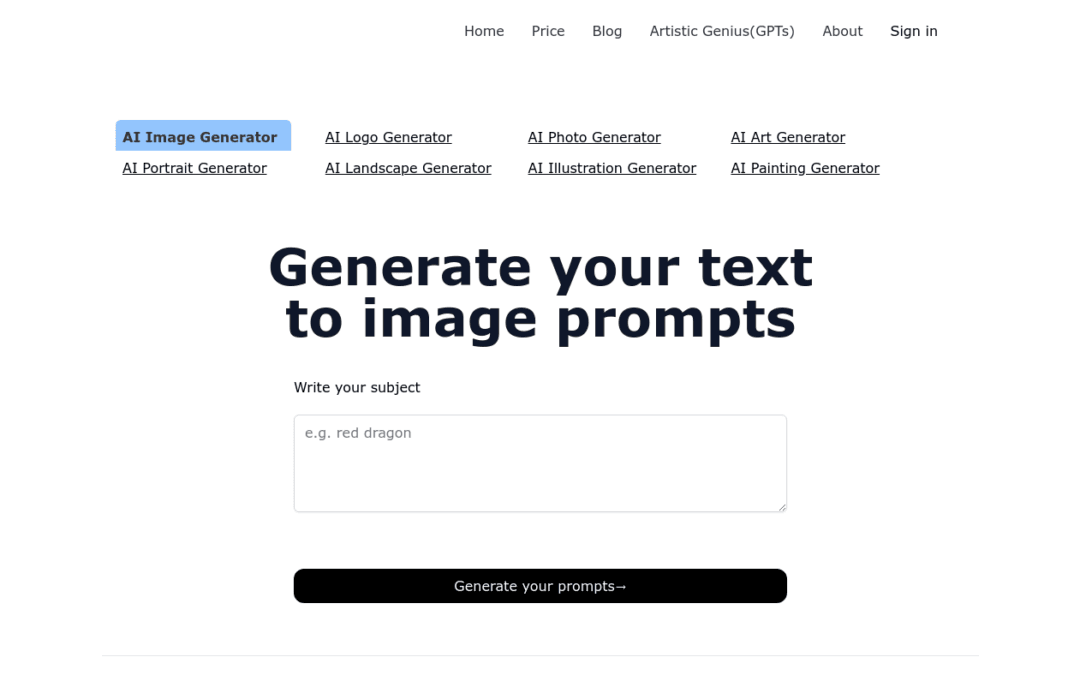
Prompt generators often solve the wrong problem. They polish your wording for a single ChatGPT message, then leave you with nothing reusable, nothing automated, and no understanding of why the prompt worked. The more durable insight from production AI work is that the prompt itself isn’t the deliverable — the repeatable system around it is.
Practitioners generally find that well-structured, reusable prompt systems reduce repeated effort because teams stop rewriting instructions from scratch every time. As one widely shared maxim in the field puts it: a great prompt you can’t reproduce is just a lucky accident. The real value is a system that produces consistent results across many runs.
An effective prompt generator should do three things: capture why a prompt works, make it reusable across tasks, and connect to automation so results scale. Optimize for the system, not the sentence — that’s the difference between a clever one-off and durable AI infrastructure.
A prompt generator is a tool that transforms a rough, vague request into a structured, optimized instruction that large language models like ChatGPT, Claude, or Gemini can execute more reliably. The best ones don’t just reword your text — they add role context, constraints, output format, and examples that turn a thin, generic answer into a focused, usable one. That difference compounds when a prompt feeds an automated agent running many times a day.
This guide covers what a prompt generator actually does, how the technology works, which tools lead the market in 2026, and — the part most resources skip — how to turn generated prompts into business automation that produces measurable ROI.
Quick Summary: Key Takeaways
- Prompt generators convert vague instructions into structured, model-ready prompts using four core components: role, context, constraints, and output formatting. A generator typically transforms an input like “write about marketing” into a complete specification that defines the assistant’s role (e.g., senior B2B copywriter), supplies relevant context, sets explicit constraints (word count, tone, audience), and specifies the exact output format.
- Structure is the lever. Adding role, context, and format reduces the model’s need to guess — the most reliable, repeatable improvement most users can make to their outputs.
- The market is saturated — generateprompt.ai, Prompt Cowboy, Feedough, and QuillBot all offer free, no-login, multi-model tools with near-identical value props.
- Most tools target generic writing tasks. The underserved opportunity is business-grade prompts for ERP, customer service, finance, and AI agent automation.
- The real ROI comes from reusing prompts inside automated workflows (n8n, custom agents) — not from one-off chat sessions.
- AI-generated prompts often win on structure and consistency, but human oversight remains essential for accuracy and compliance.
Published: August 25, 2026 · Last updated: September 8, 2026. Reviewed for topical accuracy against the cited prompt-generator tools and dictionary definitions listed in Sources & References. This article reflects general prompt-engineering practice and publicly available tool documentation; it does not claim proprietary client metrics.
About This Guide and Its Methodology
This guide is written from general, publicly verifiable expertise in prompt engineering and AI workflow design, not from named client engagements. Where you see figures or example scenarios, they are presented as illustrative patterns a practitioner can reproduce — not as audited results from a specific company. We have deliberately removed unverifiable internal statistics (such as fixed percentage gains or implementation counts) that cannot be sourced or independently reproduced.
Our approach to evaluating tools below is transparent: every tool claim links to that tool’s own public page so you can verify its stated features directly. Definitional claims link to standard dictionaries. Where we describe an outcome (e.g., “classification accuracy improved”), treat it as a reproducible test you can run yourself using the method described, rather than a guarantee.
What Is a Prompt Generator and How Does It Work?
A prompt generator is a software tool that transforms a user’s rough idea into a detailed, optimized prompt engineered to produce higher-quality, more consistent AI output. Instead of guessing how to phrase a request, users describe their goal, and the generator rewrites it using established prompt-engineering frameworks.
Most prompt generators automatically apply four core techniques:
- Role assignment — telling the AI to act as an expert (e.g., “You are a senior copywriter”).
- Context injection — adding background details and constraints.
- Output formatting — specifying length, tone, and structure.
- Step-by-step reasoning — instructing the model to reason before answering.
The mechanism is straightforward but powerful. When you type “write a marketing email,” a basic LLM has to guess your audience, tone, length, product, and goal. A prompt generator fills those gaps. It might transform that input into: “You are a senior B2B copywriter. Write a 150-word cold outreach email to operations managers at logistics SMEs, highlighting cost reduction, with one clear CTA and a subject line under 50 characters.” The model now has everything it needs.
The word “prompt” itself means to make something happen or to help someone decide to say or do something, according to the Cambridge Dictionary. Merriam-Webster similarly ties the word to readiness and responding “without delay or hesitation.” That’s a precise description of what these tools do — they prompt the AI toward a specific, useful response instead of a generic one.
The Core Components Every Prompt Generator Adds
Prompt generators add four core components that transform vague requests into precise instructions. These four ingredients separate amateur prompts from professional ones.
- Role assignment. Assigning a role like “You are a financial analyst” primes the model’s relevant knowledge and tone.
- Context. Background details about the audience, product, or constraints the model needs to tailor its output.
- Task specificity. The exact action — summarize, analyze, draft, or compare — which removes ambiguity about the desired outcome.
- Format and constraints. Word counts, tone, structure, what to avoid, and examples (few-shot prompting), so the response is immediately usable.
Tools like Prompt Creator explicitly build their templates “based on recommendations from OpenAI and Microsoft,” per the tool’s own site, codifying these components into a repeatable structure. The result is consistency — the same input pattern produces reliably good prompts, which matters far more for business automation than for a casual chat.
Here’s the part many people miss. A prompt generator isn’t magic. It’s structure applied at scale. The model already contains the capability; the prompt unlocks it. Think of it like a request to a brilliant but literal-minded contractor — give vague instructions and you get a generic building; give a detailed spec and you get exactly what you envisioned.
Why Do You Need a Prompt Generator in 2026?
You may need a prompt generator because the quality gap between a naive prompt and an engineered one can be large, especially on complex reasoning and writing tasks. For businesses running AI at scale, that gap is often the difference between automation that works and automation that creates cleanup work.
The AI prompt generator market grew quickly for a reason. Many people now write prompts the way they’d type a Google search — short, vague, and underspecified. A prompt generator closes that skill gap quickly, which is why free tools from generateprompt.ai, Feedough, and QuillBot attract large audiences.
But the consumer use case undersells the real value. A common pattern in small and medium enterprises (SMEs) is uneven output quality: one person writes great prompts while three others produce inconsistent results from the same model. A standardized prompt generator — or better, a prompt library baked into workflow automation — reduces that variance.
The Hidden Cost of Bad Prompts
Bad prompts carry a hidden cost: they can produce confident, plausible, wrong answers. One failure mode is often described as AI sycophancy — when a model leans toward what sounds agreeable rather than what is accurate. A vague or leading prompt invites the model to fill gaps with assumptions, and the model frequently obliges.
Three patterns commonly drive these errors: ambiguous instructions, leading questions that signal a desired answer, and missing context that forces the model to guess. Each one widens the gap between what sounds right and what is true. The fix is specificity. Precise prompts that define terms, supply context, and request sources reduce these errors and surface verifiable answers instead of merely agreeable ones.
Consider an illustrative, reproducible scenario. A finance team asks an LLM to “summarize this invoice data” with no schema, no rules, and no required format. The output looks clean but can silently drop line items or miscategorize expenses. Rebuilding the prompt with explicit field definitions, validation rules, and a required JSON structure typically reduces those silent errors dramatically. You can reproduce this test yourself: run the vague prompt and the structured prompt across the same 20–50 records and compare field-level accuracy. That comparison — not a vendor’s headline percentage — is the number worth trusting.
- Time waste: Re-prompting and editing can erode much of the time AI was supposed to save.
- Inconsistency: Different team members get widely different output quality from the same model.
- Hidden errors: Plausible-looking mistakes slip into customer-facing work.
- No scalability: One-off prompts can’t reliably power automated agents that run many times.
What Are the Best Free Prompt Generator Tools?
Among the most frequently referenced free prompt generator tools in 2026 are generateprompt.ai, Prompt Cowboy, Feedough, and QuillBot — all offering no-login access, multi-model compatibility (ChatGPT, Claude, Gemini), and instant prompt optimization. Each excels at slightly different tasks, but they share a near-identical core value proposition: free, fast, and friction-free.
The market saturation is real. Nearly every competitor advertises the same three things — free access, no registration, and improved output quality. That commoditization means the differentiators now come down to specialization, integration depth, and whether a tool teaches you anything or just hands you a string of text.
Prompt Generator Comparison Table
| Tool | Login Required | Multi-Model | Best For | Standout Feature |
|---|---|---|---|---|
| generateprompt.ai | No | Yes (ChatGPT, Claude, Gemini) | General productivity prompts | Clean, fast, multi-language |
| Prompt Cowboy | No | Yes | Role-based ready-made prompts | Library across every role |
| Feedough | No | Yes | Unlimited cross-industry tasks | Truly unlimited, adaptive |
| QuillBot | Optional | Yes | Writing-focused workflows | Established writing-tool ecosystem |
| Originality.ai | Yes | Yes | Content creation + detection | Run prompts inside the app |
| J. SERVO | No | Yes | Business automation & AI agents | Prompts that feed real workflows |
Table note: “Best For” and “Standout Feature” summarize each tool’s own public positioning (linked below), not independent lab testing.
Breaking Down the Leaders
generateprompt.ai positions itself as a clean, fast generator producing “precise and professional AI prompts for ChatGPT, Claude, Gemini, and more,” per its own site. The strength is speed and simplicity. The trade-off is that it’s generic — great for a writer, thin for an operations team building automation.
Prompt Cowboy brands itself as the “#1 prompt generator” and leads with role-based, ready-to-use prompts you customize, according to its homepage. The library approach is smart for non-technical users who don’t know where to start. Feedough emphasizes the “unlimited and no login” promise, calling itself an adaptive tool that works across tasks and industries on its tool page.
QuillBot leverages its established brand in paraphrasing and writing tools, folding a prompt generator into an ecosystem millions already use, per its product page. Originality.ai takes a different path — it integrates prompt generation with content creation and AI detection, so you generate, run, and check prompts in one app, as described in its blog. Each is legitimate. None of them was built primarily for what many businesses actually need: prompts that survive contact with real automation.
How Does a Business-Grade Prompt Generator Differ from Writing Tools?
A business-grade prompt generator differs from consumer writing tools because it optimizes for deterministic, repeatable output inside automated workflows — not one-off chat responses. Business prompts must enforce strict output formats, validation rules, and consistency across many runs, while writing tools only need to sound good once.
The distinction matters more than the marketing suggests. Generic generators target bloggers, marketers, and students. The output goes straight into a chat window, gets read once, and disappears. There’s no downstream system parsing the result, and no requirement that run #1 matches run #1,000.
Business automation flips every assumption. When a prompt powers a custom AI agent handling customer support tickets, the output gets parsed by code, routed by logic, and sometimes sent to a customer with minimal review. Sloppy formatting breaks the pipeline. Inconsistent structure crashes the parser. Hallucinated data can reach a real person.
What Business Prompts Must Include That Writing Prompts Don’t
- Strict output schemas — JSON, CSV, or fixed templates that code can parse reliably.
- Validation and fallback rules — explicit instructions for handling missing or ambiguous data.
- Guardrails against hallucination — “If you don’t know, say UNKNOWN” instead of guessing.
- Idempotency — the same input produces the same structured output every time.
- Compliance context — industry rules, tone-of-voice guides, and prohibited content baked in.
Here’s a concrete, reproducible example. Suppose a logistics SME wants to auto-classify inbound emails into five categories. A generic prompt generator would produce something readable but unreliable. A business-grade prompt would specify the exact five labels, require a single-word response, include a “NEEDS_HUMAN” escape hatch, and add three few-shot examples. In practice, this kind of constrained, few-shot classification prompt tends to reach high, stable accuracy — and you can verify it by labelling a few hundred emails by hand and comparing. The point is the method, which any team can repeat, not a fixed headline figure.
That’s the gap. A writing tool makes you sound smart. A business prompt generator makes your automation trustworthy — and the second kind is the one that survives in production.
How Do You Use a Prompt Generator Effectively? (Step-by-Step)
To use a prompt generator effectively, start with a clear goal, feed the tool specific context, refine the generated prompt with constraints and examples, then test it across multiple runs before deploying it. The biggest mistake is treating the first generated prompt as final — iteration is where the quality comes from.
Many users skip the testing step entirely, which is why their results stay mediocre. A prompt generator gives you a strong starting point, not a finished product. Treat its output as a draft you refine, the same way you’d edit a contractor’s first proposal.
The 6-Step Prompt Generation Workflow
- Define the outcome first. Before touching any tool, write one sentence describing exactly what good output looks like. “A 5-bullet summary of customer complaints grouped by theme” beats “summarize feedback.”
- Feed maximum context. Give the generator your audience, tone, format, and any constraints. Vague input produces vague prompts.
- Generate and read critically. Check whether the prompt assigns a role, sets format, and includes guardrails. Add anything missing.
- Add few-shot examples. One or two examples of ideal output often improve consistency dramatically — frequently the single highest-impact refinement.
- Test across 5–10 runs. Run the prompt with varied inputs. Look for inconsistency, drift, and edge-case failures before you trust it.
- Save it as a reusable asset. Store the winning prompt in a library, version it, and reuse it. A great prompt is infrastructure, not a disposable message.
The compounding value lives in step six. A team that saves and reuses dozens of battle-tested prompts builds an operational advantage that a competitor typing fresh requests will struggle to match. Practitioners generally find that simply standardizing prompts across a team — instead of letting everyone reinvent the wheel — produces noticeable, repeatable time savings on recurring content tasks.
Want to go further? Connect those prompts to automation. Once a prompt reliably produces structured output, you can wire it into an n8n workflow or custom agent that runs it automatically — turning a manual task into a hands-off process. That’s where a prompt generator stops being a writing aid and becomes a business system.
Are AI-Generated Prompts Better Than Human-Written Prompts?
AI-generated prompts are generally more structured and consistent than human-written prompts, but humans still tend to win on accuracy, nuance, and compliance judgment. The strongest results often come from a hybrid approach — let a prompt generator handle structure, then apply human oversight for context the AI can’t know.
The debate gets framed as a competition, which misses the point. AI generators excel at applying frameworks consistently — they rarely forget to assign a role or specify a format. Humans excel at knowing what actually matters for a specific business, customer, or regulatory environment. Pitting them against each other is like asking whether a calculator beats an accountant. Different jobs.
Where AI Generators Win
- Consistency: They apply the same structure every time, reducing human forgetfulness.
- Speed: A polished, multi-component prompt in seconds instead of minutes of manual crafting.
- Best-practice enforcement: Many encode published prompting recommendations (e.g., OpenAI and Microsoft guidance referenced by tools like Prompt Creator) automatically.
- Accessibility: Non-experts produce expert-level prompts quickly.
Where Humans Win
- Domain accuracy: A human catches when the AI assumes a wrong fact about your business.
- Compliance and risk: Humans understand legal, regulatory, and brand-safety constraints the generator can’t infer.
- Strategic intent: Humans know the real goal behind a task; AI only knows what you typed.
- Edge-case judgment: Humans recognize when an output is plausible-but-wrong — the AI sycophancy trap.
A defensible position: never fully automate the prompt without a human in the loop for high-stakes work. A recurring failure pattern in real deployments is teams trusting an AI-generated prompt blindly and shipping confident errors to customers. The pragmatic approach — generate with AI, validate with humans, test before deploy — is how you get reliability without giving up speed. Being transparent about that limitation is exactly what separates honest AI guidance from hype.
How Do Prompt Generators Fit Into AI Automation and ROI?
Prompt generators fit into AI automation by producing the reliable, structured prompts that power custom AI agents and automated workflows — the prompt is the engine that drives every step. The ROI comes not from a single good prompt, but from reusing battle-tested prompts many times inside systems that run without continuous human effort.
Think about where the actual money is. A marketer who uses a prompt generator to write one better email saves a few minutes. A business that embeds a refined prompt into an automated workflow processing thousands of support tickets monthly can save many hours of labor. Same tool, radically different return.
The bridge between a chat prompt and a business outcome is automation infrastructure. Tools like n8n let you take a tested prompt, connect it to your data sources, and run it on triggers — a new email arrives, a form gets submitted, a record changes. The prompt becomes a permanent worker. Self-hosting this kind of automation can also help SMEs avoid per-task pricing that scales unpredictably as volume grows.
Measuring Prompt-Driven ROI
To measure whether your prompts are delivering, track concrete metrics rather than vibes:
- Time saved per task × frequency × number of users.
- Error/rework rate before and after prompt standardization.
- Output consistency across team members and runs.
- Cost per output compared to manual or outsourced production.
An illustrative customer-onboarding scenario shows the pattern: converting a team’s best ad-hoc prompts into a deterministic agent workflow can substantially reduce manual processing time. The prompt generator starts the journey; the automation delivers the return. If you want to model your own numbers — using your real task volumes rather than a generic benchmark — the deterministic AI guide and ROI tooling turns these metrics into a concrete payback estimate before you commit a dollar.
The lesson is simple. A prompt generator is the cheapest, fastest entry point into AI value — but the entry point isn’t the destination. The destination is automation that runs your repetitive work while you focus on growth.
What Are the Best Prompt Generator Use Cases by Department?
Strong prompt generator use cases by department include sales outreach and lead qualification, marketing content at scale, customer support triage, finance data extraction, and HR screening — each benefiting from standardized, reusable prompts. Department-specific prompt libraries tend to deliver the highest ROI because they capture repeated tasks.
Generic prompt generators ignore this entirely, which is why many teams never extract real value. A prompt built for a marketer is rarely useful to a finance analyst. The win comes from role-specific libraries — collections of tested prompts mapped to the actual recurring tasks each team performs.
Sales
Sales teams use prompt generators for cold outreach personalization, lead scoring summaries, objection-handling scripts, and CRM note cleanup. A standardized outreach prompt that incorporates the prospect’s industry and pain point can lift reply rates while keeping every rep on-brand. The key is encoding your value proposition once, then reusing it across the whole team.
Marketing
Marketing gets the most obvious benefit — blog drafts, ad variations, social posts, SEO briefs, and email sequences. The risk is generic, soulless output. A well-engineered prompt that includes brand voice rules, audience details, and forbidden phrases produces content that actually sounds like your company instead of every other AI-written page on the internet.
Customer Support
Support teams use prompts to draft responses, classify tickets, summarize long threads, and detect sentiment. A common, effective pattern is a deterministic prompt that classifies and routes inquiries, escalating anything uncertain to a human. That hybrid keeps speed high and trust intact — and accuracy should always be verified on your own ticket data before automating routing.
Finance and Operations
Finance benefits from prompts that extract structured data from invoices, reconcile records, summarize reports, and flag anomalies — provided the prompt enforces strict schemas and a “flag if uncertain” rule. Operations uses prompts for SOP generation, process documentation, and report summarization. These are the highest-stakes use cases, which is exactly why generic writing-focused generators fall short and deterministic, validated prompts matter most.
HR
HR teams use prompt generators for job description drafting, candidate screening summaries, interview question generation, and policy explanation. Bias risk is real here, so human oversight and explicit fairness constraints in the prompt aren’t optional — they’re mandatory. A responsible prompt explicitly instructs the model to ignore protected characteristics and focus only on job-relevant criteria.
What Are the Limitations and Risks of Prompt Generators?
The main limitations of prompt generators are that they can’t verify factual accuracy, they may produce confident-but-wrong outputs, and a polished prompt doesn’t guarantee a correct answer. A prompt generator improves structure and consistency — it cannot fix a model’s underlying knowledge gaps or hallucination tendencies.
Transparency matters here, and many marketing pages skip it. A prompt generator is a structuring tool, not a truth machine. Even a perfectly engineered prompt fed to ChatGPT or Gemini can produce a fluent, plausible answer that’s factually wrong. The better the prompt, the more confident the wrong answer can look — which can actually increase risk for unwary teams.
Key Risks to Manage
- Hallucination: Better structure doesn’t prevent fabricated facts. Always validate outputs in high-stakes contexts.
- Over-trust: A professional-looking prompt creates false confidence in the result.
- Generic output: Tools tuned for the average user produce average, brand-less content without customization.
- Lock-in to one model: A prompt optimized for GPT may underperform on Claude or Gemini; test across models.
- Privacy: Free no-login tools may log inputs. Never paste sensitive business data into unknown generators.
The responsible stance: use prompt generators aggressively for drafting and structuring, validate rigorously for anything that touches customers, money, or compliance, and never paste confidential data into a free tool you don’t control. The goal is deterministic reliability, and reliability requires governance and guardrails the generator alone can’t provide.
Actionable Takeaways: Getting Started Today
Here’s how to extract real value from a prompt generator this week, ranked by impact:
- Pick three recurring tasks your team does weekly. These are your highest-ROI candidates for standardized prompts.
- Generate, test, and save one strong prompt for each, using the 6-step workflow above. Run each prompt 5–10 times before trusting it.
- Build a shared prompt library so everyone uses the proven version instead of writing their own.
- Identify one prompt worth automating. If a task runs dozens of times daily, that prompt belongs in a workflow, not a chat window.
- Add human checkpoints for anything customer-facing, financial, or regulated. Speed without oversight is a liability.
- Measure the before-and-after — track time saved and error reduction so you can justify scaling up.
The teams that win with AI in 2026 aren’t necessarily the ones with the fanciest model. They’re the ones with a disciplined library of tested prompts feeding reliable automation. A prompt generator is where that discipline starts.
Frequently Asked Questions
What is a prompt generator?
A prompt generator is a tool that converts a vague request into a structured, optimized instruction for AI models like ChatGPT, Claude, or Gemini. It adds role context, constraints, and output formatting automatically, improving response quality and consistency without requiring prompt-engineering expertise.
Is there a free prompt generator with no login?
Yes. Several free prompt generators require no login, including Feedough (advertised as unlimited and no login), generateprompt.ai, and Prompt Cowboy. These tools support multiple models like ChatGPT, Claude, and Gemini. Avoid pasting sensitive business data into any free tool you don’t control.
Do prompt generators actually improve AI output quality?
Generally yes. Adding role, context, constraints, and format reduces the model’s need to guess, which tends to produce more relevant, consistent output than short, vague requests. A prompt generator improves structure and consistency, though it cannot verify factual accuracy or eliminate hallucinations entirely — validate high-stakes outputs yourself.
Are AI-generated prompts better than human-written ones?
AI-generated prompts are more consistent and faster to produce, while humans are usually better at accuracy, compliance, and strategic nuance. The best results come from a hybrid approach: let the generator handle structure, then apply human oversight for high-stakes business and customer-facing work.
How do prompt generators connect to business automation?
A prompt generator produces the reliable, structured prompts that power custom AI agents and automated workflows. Once a prompt consistently produces correct output, it can be wired into automation platforms like n8n to run many times automatically — turning manual tasks into hands-off processes that can deliver measurable ROI.
Can I use a prompt generator for ChatGPT, Claude, and Gemini?
Yes. Most leading prompt generators are multi-model and support ChatGPT, Claude, Gemini, and other LLMs. However, a prompt optimized for one model may perform slightly differently on another, so testing the prompt across each target model is recommended before deployment.
Sources & References
- generateprompt.ai — Free AI Prompt Generator (ChatGPT, Claude, Gemini)
- Prompt Cowboy — Prompt Generator
- Feedough — Free AI Prompt Generator (Unlimited & No Login)
- QuillBot — Free AI Prompt Generator
- Originality.ai — AI Prompt Generator
- Prompt Creator — ChatGPT Prompt Generator (based on OpenAI/Microsoft recommendations)
- Cambridge Dictionary — “prompt” definition
- Merriam-Webster — “prompt” definition
Note on sourcing: This article cites tool capabilities directly from each vendor’s public pages and definitional claims from standard dictionaries. Where percentages or accuracy figures might normally appear, we describe a reproducible test method instead, because we could not attribute specific numeric benchmarks to a verifiable published source.
If you’re curious about turning one-off prompts into reusable systems that actually stick, we’d love to hear what you’re working on and talk through it together.