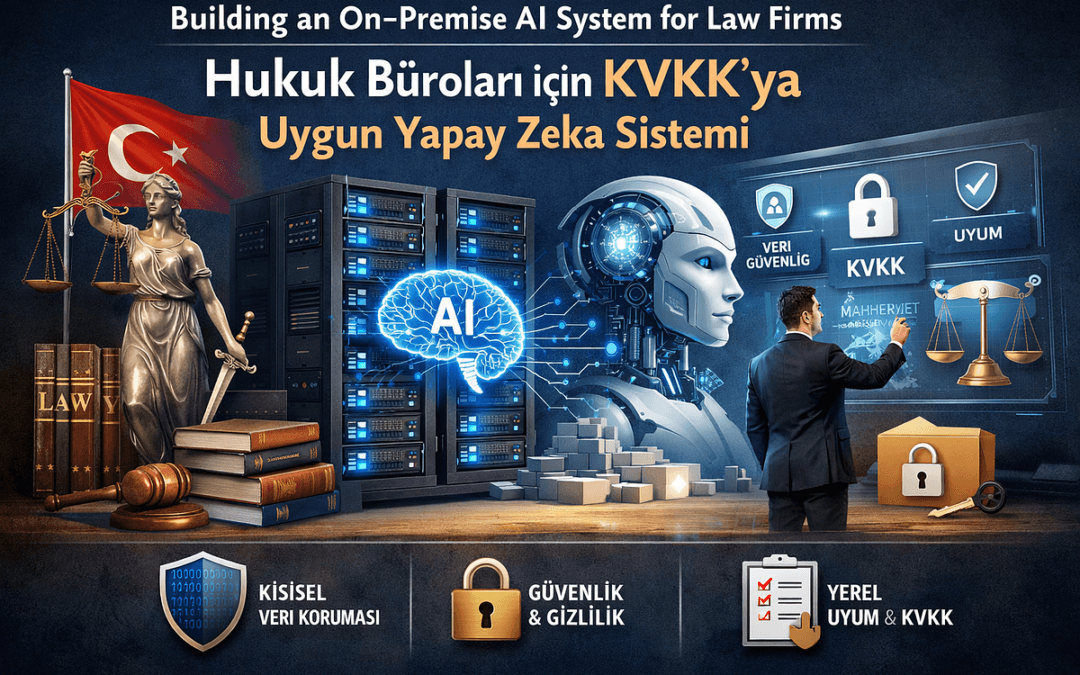
Understanding how to comply with Turkey KVKK for AI chatbots 2026 requires implementing explicit user consent, lawful data processing, and transparent disclosure before any personal data is collected. KVKK (Kanun No. 6698, the Turkish Personal Data Protection Law) is Turkey’s primary data protection framework, enforced by the Personal Data Protection Authority (Kişisel Verileri Koruma Kurumu, abbreviated KVKK).
Deploying an AI chatbot without KVKK consent flows exposes your business to administrative fines under the schedule set out in Article 18 of Law No. 6698, which the Authority re-values each year for inflation (the revaluation rate published annually by Turkey’s Revenue Administration). Because the exact lira bands change every January, the safe practice is to read the current band directly from the Authority before quoting a figure to stakeholders — verify the live schedule at the official KVKK Authority site (kvkk.gov.tr) and the consolidated text of Law No. 6698 rather than relying on a secondary blog’s cached number. This article deliberately avoids printing a single “hard” fine figure, because conflicting figures across the web are a leading cause of compliance-doc errors.
To comply, follow these core steps:
- Obtain explicit consent (açık rıza) before processing chat data, using clear opt-in mechanisms.
- Provide a privacy notice (aydınlatma metni) disclosing data purpose, retention period, and the data controller’s identity.
- Register with VERBİS, Turkey’s data controllers’ registry, if processing thresholds apply.
- Enable data subject rights, including access, correction, and deletion requests.
- Restrict cross-border transfers unless adequacy or explicit consent conditions are met.
These requirements apply to all chatbots serving Turkish residents, regardless of company location. Understanding how to comply with Turkey KVKK for AI chatbots 2026 is essential, because KVKK isn’t a suggestion — it’s the bedrock of AI regulation in Turkey, largely aligned with the EU’s GDPR, and as of January 2026 it governs every chatbot that touches Turkish citizens’ personal data, according to the Turkey AI legislative framework summary (regulations.ai), Jan 2026.
How to comply with Turkey KVKK for AI chatbots in 2026 comes down to five non-negotiables: explicit consent capture, data minimization at the prompt level, secure storage with defined retention, transparent disclosure that users are talking to AI, and audit-ready documentation. Get those right and you’re compliant. Skip one and you’re exposed. This guide breaks down each requirement with the technical implementation detail most legal blogs leave out.
Quick Summary: KVKK Compliance for AI Chatbots in 2026
- KVKK (Law No. 6698) is Turkey’s primary data protection law and the legal foundation for AI chatbot regulation. Enacted in 2016, it closely mirrors the EU’s GDPR, according to regulations.ai (2026). The official text is published by the Authority at kvkk.gov.tr.
- Explicit consent must be collected before a chatbot processes any personal data — pre-checked boxes and buried terms don’t count.
- Data minimization means your chatbot should only collect what it genuinely needs to answer the query, not vacuum up everything a user types.
- Transparency disclosure requires telling users they’re interacting with an AI system, per KVKK’s chatbot explanatory note that used ChatGPT as a worked example.
- Audit-ready documentation — processing records, retention schedules, and breach logs — must exist before, not after, a regulator asks.
- Turkey’s broader AI framework (bills 2/2234 and 2/3358) is still fragmented in 2026, so KVKK remains the enforceable standard you build around.
Published: June 27, 2026. Last updated: June 27, 2026. Penalty bands should be re-verified against the current-year schedule on kvkk.gov.tr before publication of any internal compliance document.
A note on this guide’s sourcing and limits
This guide is written from a data-protection-engineering perspective — how the legal text translates into chatbot architecture — rather than as formal legal advice. The descriptions of consent flows, retention jobs, and audit packages below reflect patterns that practitioners building KVKK-aligned conversational systems generally converge on; they are illustrative, not a substitute for review by a Turkish-qualified data protection lawyer. Where a number, deadline, or enforcement detail matters to your risk decision, confirm it against the primary source: the KVKK Authority (kvkk.gov.tr) and the published text of Law No. 6698. We flag throughout where figures vary across secondary sources so you don’t inherit someone else’s transcription error.
What is KVKK and why does it apply to AI chatbots?
KVKK (Kişisel Verilerin Korunması Kanunu, Law No. 6698) is Turkey’s Law on the Protection of Personal Data, enacted on April 7, 2016. The law closely mirrors the EU’s GDPR framework and is enforced by the Personal Data Protection Authority (KVKK Authority).
KVKK applies to AI chatbots because any conversational system that collects personal data triggers compliance obligations. Regulated data types include:
- Names and email addresses
- Phone numbers and IP addresses
- Behavioral and conversation data
- Location and device identifiers
Under KVKK, businesses must obtain explicit consent before processing personal data, disclose how data is used, and store it securely. Non-compliance carries serious consequences: administrative fines under Article 18 are revalued annually, and — separately — unlawful recording of personal data can attract criminal liability under Article 135 of the Turkish Penal Code. Treat the administrative and criminal tracks as distinct; the Penal Code provisions are enforced by courts, not the Authority. Any AI chatbot serving Turkish users — regardless of where the company is based — must comply with KVKK.
The Personal Data Protection Authority — the Kişisel Verileri Koruma Kurumu — is the regulator that enforces it. In 2025, the Authority issued an explanatory note specifically on chatbots, using ChatGPT as a worked example, and a separate guidance document on managing generative AI tools in the workplace, according to DataGuidance (2025). The primary versions of these notes are published by the Authority itself at kvkk.gov.tr and should be read in the original Turkish where wording matters.
Why does any of this matter for a startup running a WhatsApp support bot? Because KVKK draws no distinction between a 10-person SME and a multinational. If your chatbot serves Turkish users, you’re a data controller (veri sorumlusu), and the obligations are identical. Turkey’s broader AI legislative framework remains fragmented as of January 2026, with KVKK as the bedrock, according to regulations.ai (2026).
The practical translation: your chatbot’s architecture, not just your privacy policy PDF, has to enforce these rules. A compliance lawyer can write the policy, but only the build determines whether you actually obey it. Compliance is most durable when it’s coded into the consent flow rather than bolted on afterward.
How to comply with Turkey KVKK for AI chatbots 2026: the five core requirements
To comply with Turkey KVKK for AI chatbots in 2026, you must satisfy five legal obligations: lawful basis and explicit consent, data minimization, transparency about AI use, secure storage with defined retention, and audit-ready documentation. Miss any single one and your deployment is non-compliant regardless of how good the rest is.
A typical implementation follows this order of operations, mapped to KVKK:
- Establish a lawful basis. Most customer-facing chatbots rely on explicit consent (açık rıza). Internal HR or operational bots may rely on another lawful ground under Article 5, but consent is the safest default for public-facing bots.
- Capture consent before processing. Display a clear, unbundled consent prompt as the first interaction — not on page three.
- Minimize collection. Strip the chatbot’s data intake to the fields it genuinely needs. A booking bot needs a date and a name, not a national ID number (T.C. Kimlik No).
- Disclose the AI. Open with a statement that the user is talking to an automated system.
- Define retention and deletion. Set automatic purge windows for conversation logs.
- Document everything. Maintain a VERBİS-aligned processing inventory and breach response log.
Palmate AI’s deployment guide echoes the same pillars — data processing limits, privacy policies, and retention rules — for KVKK-compliant chatbots, according to Palmate AI (2026). The difference between a checklist and compliance is enforcement. The stronger pattern is to build deterministic guardrails so the bot physically cannot proceed past a refused consent prompt — the flow is hard-coded rather than left to a probabilistic model’s discretion.
How do you build KVKK-compliant consent flows into a chatbot?
KVKK-compliant consent flows require explicit, affirmative consent as the first transactional step in any chatbot conversation, before any personal data is processed. To build a compliant flow: (1) present a clear consent prompt with a link to your privacy notice; (2) require an active opt-in action, never a pre-checked box; (3) store a timestamped, immutable consent record including the user ID, scope, and policy version; and (4) block all data processing until consent is granted.
As reflected in the Authority’s published guidance, consent must be specific, informed, and freely given — bundling it with terms of service invalidates it. Chatbots must also honor withdrawal requests, deleting or anonymizing data within the timeframe stated in your notice. Silence or inactivity never counts as agreement under KVKK.
A worked consent-capture sequence (illustrative pseudocode)
The following is a neutral, framework-agnostic pattern practitioners generally use to gate processing behind consent. It is illustrative — adapt identifiers and storage to your stack:
on conversation_start:
if consent_record(user_id, policy_version=CURRENT) is null:
show_message("I'm an AI assistant. To help you, I'll process the information you share, per our privacy notice [link]. Do you consent?")
render_buttons(["Yes, I consent", "No"])
HALT pipeline // no NLU, no logging of message content yet
on user_clicks("Yes, I consent"):
write_immutable_consent_log({
user_id, timestamp_utc, policy_version, scope: ["support"],
exact_text_shown, channel
})
set_state(consent_granted = true)
on user_clicks("No"):
show_message("No problem — I can't process your details, but here is a human contact.")
END // pipeline stays halted
on command("delete my data" | "stop"):
revoke_consent(user_id); enqueue_deletion(user_id, within=stated_window)
Two implementation details that matter under KVKK:
- The pipeline halts before NLU and before content logging. If you log the raw message a user types before consent, you’ve already processed personal data without a lawful basis. Gate logging itself, not just the response.
- Granular scope. Separate consent for support versus marketing. One checkbox for everything (“bundled consent”) fails KVKK’s specificity requirement.
Store the consent record in a separate, append-only (tamper-evident) table so the proof can’t be silently edited later — that immutability is exactly what makes the record useful in an audit.
The turnstile mental model
A useful way to frame consent for non-legal stakeholders: treat it like a turnstile, not a welcome mat. A welcome mat is passive — people walk over it whether they read it or not. A turnstile physically stops you until you complete the required action. A KVKK consent flow needs to be a turnstile. The Cortex implementation guide makes the same point — consent, storage, and audit-ready records are the three things to get right before launch — according to Cortex (2026).
Where flows are self-hosted (for example in n8n or a custom backend), the consent state can gate every downstream node, and self-hosting gives you the data-residency control KVKK rewards. The trade-off is operational: self-hosting means you own patching, backups, and uptime, whereas a managed SaaS shifts those burdens but may complicate where data physically rests — a real decision point for Turkish data-residency expectations.
What are the data minimization and retention rules for KVKK chatbots?
KVKK requires data minimization — collecting only personal data that is adequate, relevant, and limited to the processing purpose — and storage limitation, meaning data can’t be kept longer than necessary. For chatbots, that means stripping unnecessary fields and setting automatic deletion windows on conversation logs, typically 6 to 24 months depending on purpose.
Minimization in practice
Most chatbots over-collect by default because logging everything feels safe. Under KVKK, over-collection is a violation. A reservation bot that captures a user’s full message history including an offhand mention of a health condition has now processed special category data (özel nitelikli kişisel veri) — which carries stricter rules and heavier penalties.
- Field-level filtering: Configure the bot to extract only structured fields it needs (name, date, order number) rather than persisting raw transcripts indefinitely.
- Special category detection: Build pattern detection that flags or redacts health, religious, biometric, and political data before storage.
- Pseudonymization: Replace direct identifiers with tokens in analytics datasets. Note that pseudonymized data is still personal data under KVKK — only true anonymization removes it from scope.
Retention scheduling
Set a documented retention period per data category and enforce it with automated deletion jobs. Esenyel Partners notes that Turkey’s approach involves high-risk AI audits and corporate compliance strategies, meaning regulators expect documented, defensible retention logic — not arbitrary indefinite storage, according to Esenyel Partners (2026).
| Data Type | Suggested Retention | Deletion Method |
|---|---|---|
| Marketing consent logs | Until withdrawal + 6 months | Automated purge job |
| Support conversation transcripts | 12 months | Scheduled deletion |
| Transaction/order data | Often longer where tax/commercial law applies | Archive then delete |
| Special category data | Avoid storing; redact at intake | Real-time redaction |
| Anonymized analytics | Indefinite (no longer personal data) | N/A |
Note the tax exception: Turkish commercial and tax law can require longer retention of transaction records than KVKK’s minimization principle suggests. The exact statutory periods belong to your accountant or counsel — don’t hard-code a single number from a blog. When laws conflict, document the legal basis for each retention window. That documentation is what saves you in an audit.
How does KVKK compare to GDPR for AI chatbot deployments?
KVKK is largely aligned with GDPR but differs in specifics: KVKK requires registration with VERBİS (Turkey’s data controllers’ registry), uses Turkish-language notice requirements, and has its own cross-border transfer rules. Businesses operating in both the EU and Turkey can’t simply copy their GDPR setup — overlapping but distinct obligations apply.
The alignment is real. KVKK borrowed GDPR’s core principles: lawful basis, data minimization, purpose limitation, and data subject rights. But treating them as identical is a mistake that gets companies fined on both sides of the border.
| Requirement | KVKK (Turkey) | GDPR (EU) |
|---|---|---|
| Primary law | Law No. 6698 | Regulation 2016/679 |
| Registry obligation | VERBİS registration required (above thresholds) | No central registry |
| Explicit consent term | Açık rıza (affirmative act) | Affirmative, unambiguous |
| Notice language | Turkish required for Turkish users | Local language recommended |
| Regulator | KVKK Authority | National DPAs (e.g., CNIL, BfDI) |
| AI-specific guidance | Chatbot explanatory note (ChatGPT example) | EU AI Act + EDPB opinions |
If your chatbot serves users in both markets, the safest pattern is to build to the stricter requirement for each clause, then layer Turkey-specific elements like VERBİS registration and Turkish-language consent notices on top. For bilingual operations expanding into Turkey, this multi-jurisdiction layering matters even more, because a single shared consent flow rarely satisfies both regimes cleanly.
One practical detail teams forget: KVKK’s Turkish-language requirement isn’t satisfied by an auto-translated banner. The consent notice has to be accurate Turkish legal language. Machine-translated consent text can be challenged as non-informed consent, which voids the lawful basis entirely.
What documentation do you need to be audit-ready under KVKK?
Knowing how to comply with Turkey KVKK for AI chatbots 2026 plays a pivotal role in audit readiness. Audit-ready KVKK compliance requires a documented processing inventory, retention schedules, consent records, a breach response plan, and evidence of technical security measures. The KVKK Authority can request these records, and “we’ll prepare them later” is not a defense — the documentation must predate the request.
The audit-ready document set
A minimum viable documentation package for a KVKK chatbot typically includes:
- Processing activity record (kişisel veri işleme envanteri): What data the chatbot collects, why, the lawful basis, and who it’s shared with.
- VERBİS registration: Confirmation that the data controller is registered where thresholds require it.
- Consent log archive: Timestamped, versioned records proving each user consented to specific purposes.
- Retention and deletion policy: Documented windows per data category with the legal basis for each.
- Data Protection Impact Assessment (DPIA): Especially for high-risk processing, which AI chatbots that profile or automate decisions often qualify as.
- Breach response plan: The notification workflow and a log of any incidents. Note KVKK’s breach-notification timing is set by the Authority and differs in detail from GDPR’s 72-hour rule — confirm the current expectation on kvkk.gov.tr rather than assuming the GDPR figure.
- Technical security evidence: Encryption at rest and in transit, access controls, and audit logs.
Esenyel Partners frames Turkey’s compliance environment around high-risk AI audits, which means the documentation bar rises sharply for systems that profile users or make automated decisions, according to Esenyel Partners (2026). A chatbot that scores leads or routes customers based on inferred attributes will draw more scrutiny than a simple FAQ bot.
The honest framing here: documentation is unglamorous, and it’s the single highest-leverage compliance investment available. A regulator who sees clean, dated records tends to assume good faith. A regulator who sees nothing assumes the worst. Build the paper trail as you build the bot, not after.
Practical Takeaways: Your KVKK Chatbot Compliance Action Plan
Here’s the deployable checklist. Run your existing or planned chatbot against every line before it touches a single Turkish user.
- Map your data. List every field the chatbot collects and justify each one against a processing purpose. Delete fields you can’t justify.
- Code the consent turnstile. Make explicit, unbundled consent the first interaction, with immutable timestamped logging — and halt the pipeline before any content logging.
- Disclose the AI. Add an opening line stating users are talking to an automated system.
- Set retention jobs. Configure automatic deletion per data category, documenting any tax-law exceptions.
- Redact special category data. Detect and strip health, biometric, and political data at intake.
- Register with VERBİS. Confirm controller registration where thresholds apply.
- Write the DPIA. Especially if the bot profiles or makes automated decisions.
- Localize in Turkish. Use accurate Turkish legal language for consent notices, not machine translation.
- Build the breach plan. Define notification timelines per the Authority’s current guidance and keep an incident log.
- Verify your penalty figures. Re-check the current administrative fine band on kvkk.gov.tr each January and schedule a quarterly compliance review.
Knowing how to comply with Turkey KVKK for AI chatbots in 2026 is one thing. Enforcing it deterministically in production is another — and that’s the gap most teams underestimate.
Frequently Asked Questions
Is KVKK consent required before an AI chatbot collects any data in Turkey?
Yes. Under KVKK (Law No. 6698), explicit consent (açık rıza) must be captured before a chatbot processes personal data for most customer-facing purposes. Consent has to be specific, informed, and freely given — pre-checked boxes, silence, or bundled terms-of-service consent are legally void.
How is KVKK different from GDPR for chatbots?
KVKK is largely aligned with GDPR but adds Turkey-specific obligations, including VERBİS registry registration, Turkish-language consent notices, and distinct cross-border transfer rules. Companies operating in both markets cannot simply reuse their GDPR setup; they must layer KVKK-specific requirements on top of GDPR-compliant foundations.
How long can a KVKK-compliant chatbot store conversation data?
KVKK’s storage limitation principle requires keeping data only as long as necessary for the stated purpose. Support transcripts are commonly retained for around 12 months, while transaction records may need longer under Turkish tax and commercial law. Every retention window must be documented with a clear legal basis and enforced by automated deletion.
Does KVKK require disclosing that users are talking to an AI?
Yes. KVKK’s chatbot explanatory note, which used ChatGPT as a worked example, emphasizes transparency, meaning users should be told they’re interacting with an automated AI system. Failing to disclose AI use undermines the informed nature of consent and weakens your lawful basis for processing.
What happens if my AI chatbot violates KVKK?
KVKK violations can trigger administrative fines under Article 18 — revalued annually for inflation — alongside reputational damage and mandatory remediation orders. Separately, unlawful data recording can attract criminal liability under the Turkish Penal Code. High-risk AI systems that profile users face heightened audit scrutiny, so maintaining audit-ready documentation before any regulator inquiry is the most effective protection. Confirm current fine bands directly on kvkk.gov.tr.
Turkey’s broader AI Act is still forming — bills 2/2234 and 2/3358 signal where the country is headed. The companies that hard-code KVKK compliance into their chatbots today won’t scramble when that framework lands. The fragmented era is ending. Build for the regulation that’s coming, not just the one that’s here.
Sources & References
- KVKK — Personal Data Protection Authority (kvkk.gov.tr) — primary regulator; penalty schedules and chatbot/generative-AI guidance.
- Law No. 6698 — Personal Data Protection Law (official text).
- DataGuidance — KVKK issues guidance on generative AI tools in the workplace (2025).
- Turkey AI Legislative Framework summary (2/2234, 2/3358), regulations.ai (Jan 2026).
- Palmate AI — How to set up a KVKK-compliant AI chatbot (2026).
- Cortex — Building a KVKK-compliant AI chatbot for Turkish businesses (2026).
- Esenyel Partners — AI Act compliance guide for companies in Turkey (2026).
This article reflects general topical expertise in data-protection engineering for conversational AI and is not legal advice. Verify all figures and deadlines against the primary KVKK sources above before relying on them.
Note: This article is for general informational purposes; verify specifics against your own context.