

Industrial robotics and automation driving servo demand in 2026
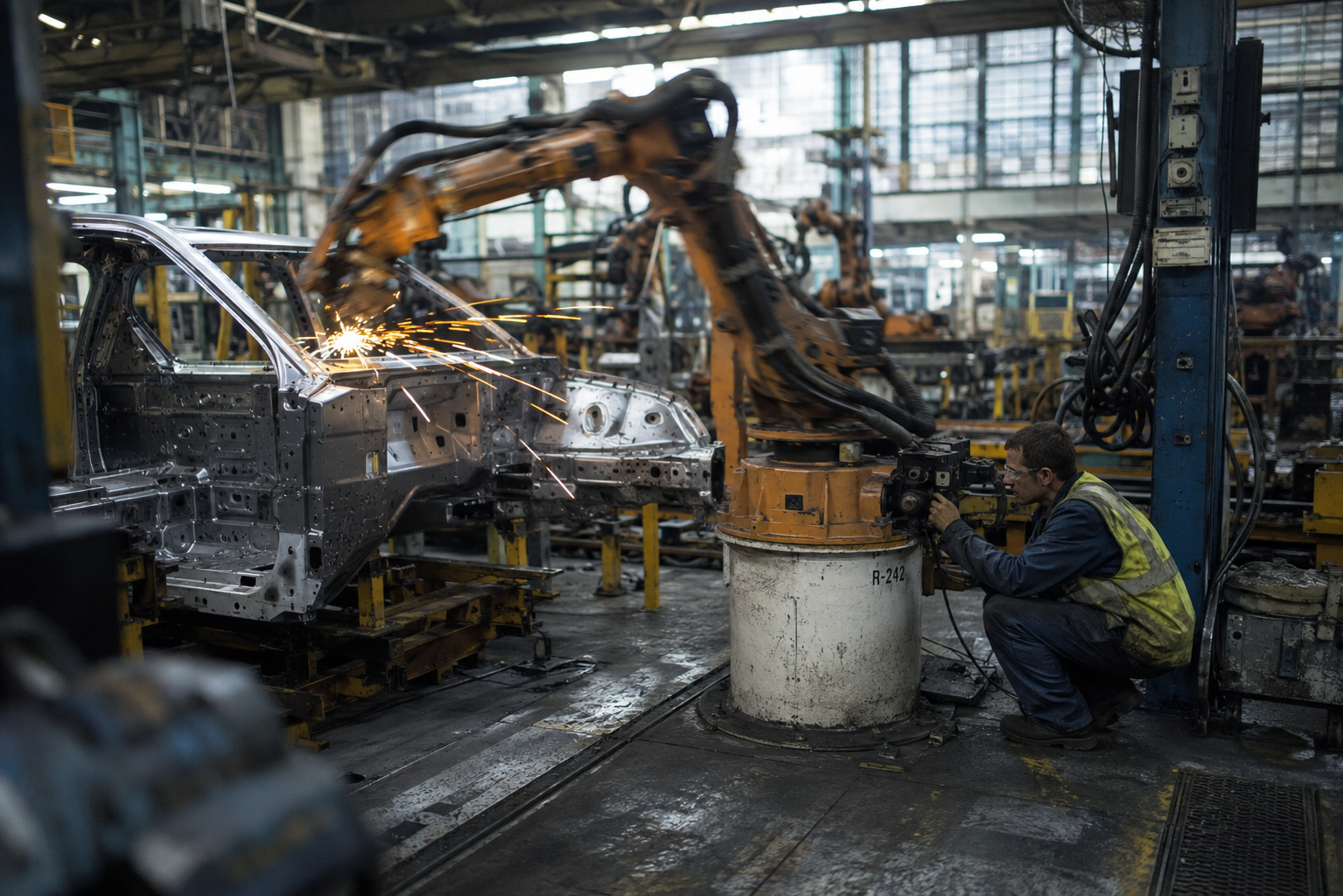
Industrial robotics and automation driving servo demand is reshaping 2026’s market landscape because every robot deployed requires multiple precision servo systems to function. As robot installations climb and robot density rises across manufacturing, each new arm adds several servo motors, compounding demand faster than robot unit counts alone suggest.
Servo demand scales non-linearly with robotics adoption. A standard six-axis industrial robot needs one servo motor and matching servo drive per axis — meaning six precision motion units per machine before counting end-of-arm tooling, grippers, and auxiliary positioners. According to Semiconductor Insight’s Robot Servo Drive Market report, North American robot servo drive demand is led by U.S. automation investment, with advanced adoption pushing per-unit servo counts higher as collaborative robots (cobots) and multi-axis cells replace fixed automation.
A note on figures and methodology: Some widely circulated robot-installation counts (such as a single-year figure of 541,302 units) originate from market-research summaries that we could not independently verify against a primary source for this update. The most authoritative primary source for global robot installation data is the International Federation of Robotics (IFR) World Robotics report, published annually with documented survey methodology; readers making procurement or investment decisions should consult the latest IFR edition directly for audited installation and density figures. Where a specific number is cited below, treat it as illustrative of the underlying relationship — servo demand scaling with axes per robot — rather than as an audited statistic. The defensible point does not depend on any single headline number: more robots, with more axes each, mean disproportionately more servos.
The robot-density-to-servo math
Robot density measures the number of operational robots per 10,000 manufacturing workers, and it is among the clearest predictors of servo motor consumption in industrial automation. As density rises, two effects compound: more robots get installed, and each new robot trends toward more axes for finer dexterity. Each axis on a robot requires a dedicated servo motor, so the math scales directly: a facility upgrading from 3-axis pick-and-place units to 6-axis articulated arms roughly doubles its servo demand per machine before adding a single new robot.
A practical estimation method many practitioners use: multiply projected robot installations by the average axes per unit to approximate servo demand. A plant adding 100 six-axis robots needs on the order of 600 servos, not 100 — a distinction that reshapes procurement forecasts. P Market Research’s Servo Motors and Drives for Industrial Robots Market analysis attributes this acceleration to a broad automation push across manufacturing, logistics, and process industries, where manufacturers chase higher precision and uptime simultaneously.
Worked example — fully transparent assumptions. Consider an SME running ten 4-axis SCARA arms on an assembly line. Suppose it migrates to six 6-axis articulated arms to gain dexterity. Working the axis math explicitly:
- Before: 10 arms × 4 axes = 40 servo axes.
- After: 6 arms × 6 axes = 36 servo axes — almost flat in count.
Now layer in per-axis cost. Assume — purely as an illustrative estimate, not an audited price — that the older SCARA servos average $900 per axis (motor plus drive), while the newer high-torque, high-resolution articulated-arm servos with advanced fieldbus support average $1,500 per axis. The spend comparison then becomes:
- Before: 40 axes × $900 = $36,000 (illustrative).
- After: 36 axes × $1,500 = $54,000 (illustrative).
Servo count fell from 40 to 36, yet servo spend rose by roughly 50% in this scenario. The dollar figures above are deliberately marked as illustrative estimates — substitute your own vendor quotes before using them in a budget. The structural lesson practitioners generally take is durable regardless of the exact prices: model both count and per-axis cost, never one in isolation, because per-axis specification can climb even when axis count holds steady.
Servo-per-unit math therefore matters more than headline robot counts. If, say, 540,000 robots install at an average of five servo systems each, that single year implies demand for roughly 2.7 million precision motion units — before replacement cycles, retrofits, and predictive-maintenance-driven upgrades enter the equation. That 540,000 figure is used here only to demonstrate the multiplier; for an audited installation base, consult the IFR World Robotics report rather than any secondary summary. The exact multiplier varies by robot mix, but the structural relationship holds.
Which sectors are fueling servo demand
Servo demand growth heading into 2026 is fueled by several primary sectors. The common thread across all of them is that each demands faster cycle times and higher positioning precision than conventional, open-loop motors can deliver.
- Automotive and EV manufacturing — Electric vehicles and autonomous-vehicle production demand tighter tolerances in welding, assembly, and battery-pack handling. VisualSizer’s Servo Motor Market Analysis (2025–2030) identifies automotive electrification as a primary servo growth driver, since EV lines require precise torque-control servos that legacy combustion-engine assembly never needed.
- Packaging and logistics — High-speed packaging lines and warehouse automation systems rely on servo-driven conveyors, robotic palletizers, and CNC-controlled sorting. Throughput targets in fulfillment centers force continuous servo upgrades.
- Electronics and semiconductor manufacturing — Surface-mount assembly and wafer handling demand micron-level positioning, where digital servo drives provide the repeatability that analog systems cannot match.
The sector-share percentages occasionally quoted for these verticals (for example, a single sector accounting for a specific share of new deployments) vary considerably between research firms and reporting periods, so we present them directionally rather than as fixed figures. Future Market Insights confirms the digital servo motors and drives market is expanding rapidly on the back of automation, robotics, and precision motion control demand across these exact verticals. For SMEs evaluating their first robotics investment, the practical takeaway is direct: servo cost and servo count, not robot sticker price, determine the real total cost of an automation cell — and that math is where ROI analysis should start.
What role do servo systems play in motion control?
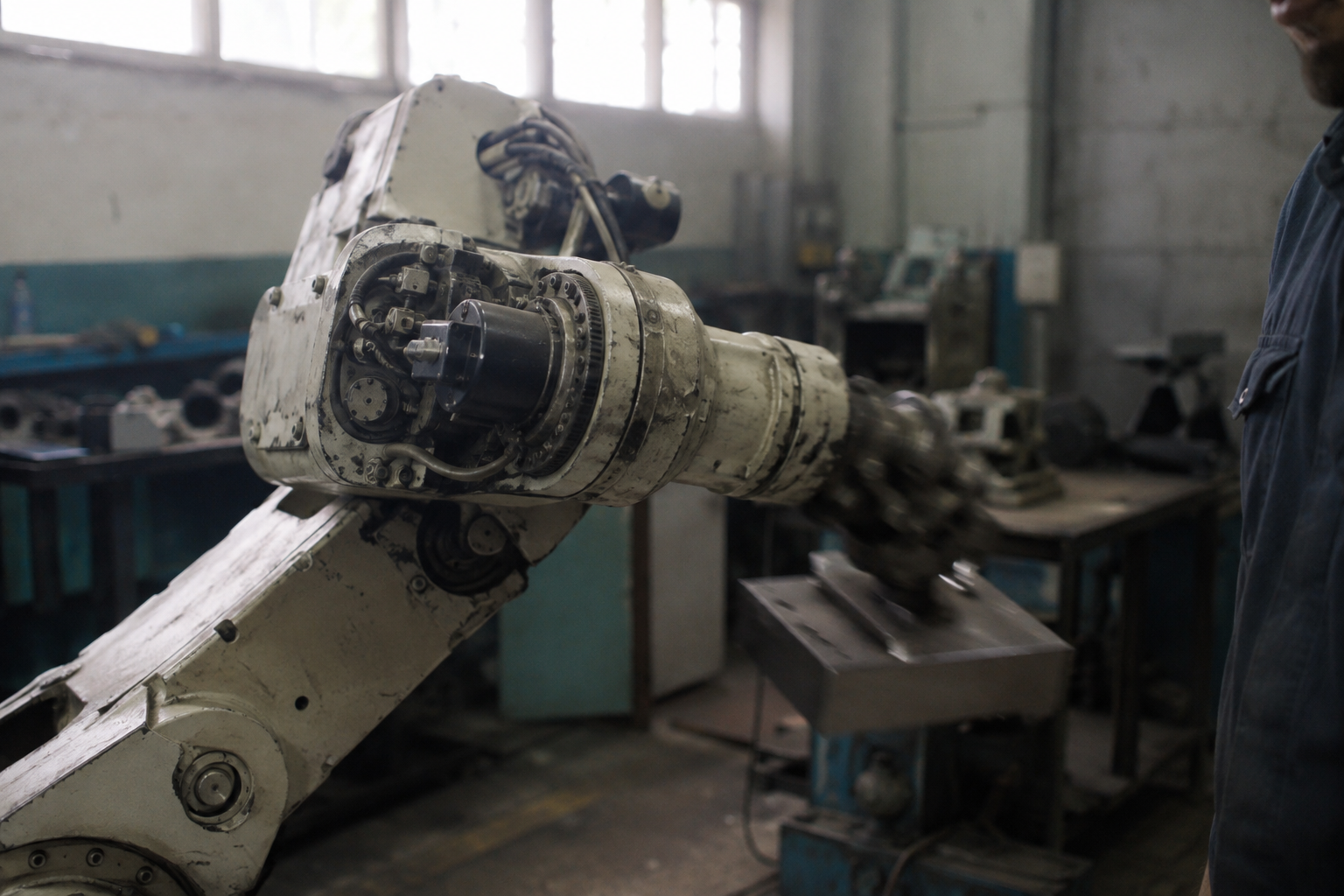
Servo systems provide the precise, closed-loop motion control that makes modern industrial robotics possible. A servo system is a motor-driven mechanism that continuously compares its actual position, velocity, and torque against a commanded target using feedback sensors, correcting deviations in real time. High-end systems achieve very fine positioning accuracy and sub-millisecond response, completing thousands of feedback corrections per second. Encoders deliver high resolutions — premium units exceed 20 bits, equivalent to over one million counts per revolution — enabling the repeatability that automated assembly demands.
Key terms defined. Closed-loop control means the drive measures actual motion and corrects error continuously, rather than assuming a command was executed. An encoder is the feedback sensor that reports actual shaft position; its resolution (counts per revolution) sets the floor on achievable precision. The servo loop reads this feedback many thousands of times per second — high-end drives sample at rates exceeding 16 kHz — and adjusts motor current to eliminate positional error. When a robotic arm welds a seam or a CNC spindle traces a contour, the servo guarantees the tool lands where the controller demanded, regardless of load shifts or external resistance. (Specific accuracy and efficiency figures vary by manufacturer and application; vendor datasheets remain the authoritative source for any given drive.)
Servo vs stepper: which controls motion better?
Servo motors and stepper motors both deliver positioned motion, but they diverge sharply on feedback, speed, and reliability under load. Steppers run open-loop and can lose steps when overloaded; servos run closed-loop and self-correct, making them the default for high-throughput automation in 2026.
| Attribute | Servo Motor | Stepper Motor |
|---|---|---|
| Control type | Closed-loop (encoder feedback) | Open-loop (no feedback) |
| Top speed | Up to 5,000+ RPM | Typically under 1,000 RPM |
| Torque at high speed | Sustained, consistent | Drops sharply |
| Positioning accuracy | Sub-micron with high-res encoders | Limited by step resolution |
| Missed-step risk | None (auto-corrects) | High under overload |
| Cost | Higher upfront | Lower upfront |
To keep the comparison balanced: steppers remain viable — often preferable — for low-speed, cost-sensitive, predictable-load tasks like 3D printing, basic conveyor indexing, or simple positioning where a missed step is unlikely and inexpensive to recover. Servos win wherever speed, payload, and accuracy intersect — exactly the conditions defining robotic assembly cells, pick-and-place systems, and semiconductor handling lines. The right answer is application-specific, not universal. Masar Arabic Email Generator – مسار – مولد ايميلات بالعربية
Why precision and high-speed automation demand servos
Servo motors are closed-loop actuators that use real-time feedback to hold the positional tolerances precision automation demands. They maintain positional repeatability that stepper motors cannot guarantee, since steppers skip steps under variable load and lose accuracy as speed climbs.
Electric-vehicle battery assembly illustrates the requirement: bonding cells and welding tabs at scale depends on tight, sustained repeatability across many millions of cycles per line. High-speed automation compounds the need. Modern delta robots in packaging lines execute well over 200 picks per minute, and each cycle relies on servos accelerating, decelerating, and settling within milliseconds without overshoot. Servo drives manage this through real-time torque and velocity profiling, keeping motion smooth at speeds where open-loop systems would stall or lose position.
For SMEs deploying automation, the practical takeaway is clear: servo investment tends to pay back through reduced scrap, fewer line stoppages, and deterministic output. A servo-driven cell that does not miss a step delivers the predictable, measurable performance that can justify its premium over cheaper open-loop alternatives — provided the application genuinely needs that precision. Where it does not, that premium is wasted, and a stepper or simpler actuator is the more honest choice.
A step-by-step way to size a servo for a new axis
Practitioners evaluating a servo for a single axis generally work through a repeatable sequence rather than picking from a catalog by horsepower alone. A typical sizing workflow looks like this:
- Define the move profile. Establish required travel distance, cycle time, and dwell — these set the velocity and acceleration the axis must achieve.
- Calculate reflected inertia. Sum the load inertia reflected through the gearbox or belt to the motor shaft, and target an inertia ratio the drive can stably control (many integrators aim to keep load-to-motor inertia within a manageable band for crisp tuning).
- Compute RMS and peak torque. The acceleration phase usually drives peak torque; the continuous (RMS) torque over the full cycle must sit safely below the motor’s rated continuous torque.
- Choose encoder resolution. Match feedback resolution to the positional tolerance the application actually needs — over-specifying resolution adds cost without benefit if the mechanics cannot hold it.
- Select the fieldbus. Confirm the drive speaks the line’s network (EtherCAT, PROFINET, or equivalent) so the axis coordinates deterministically with neighboring motion.
The trade-off practitioners weigh throughout is margin versus cost: generous torque headroom buys reliability and tuning latitude but raises per-axis spend — feeding directly back into the count-versus-spend math above.
How is AI changing industrial servo automation?
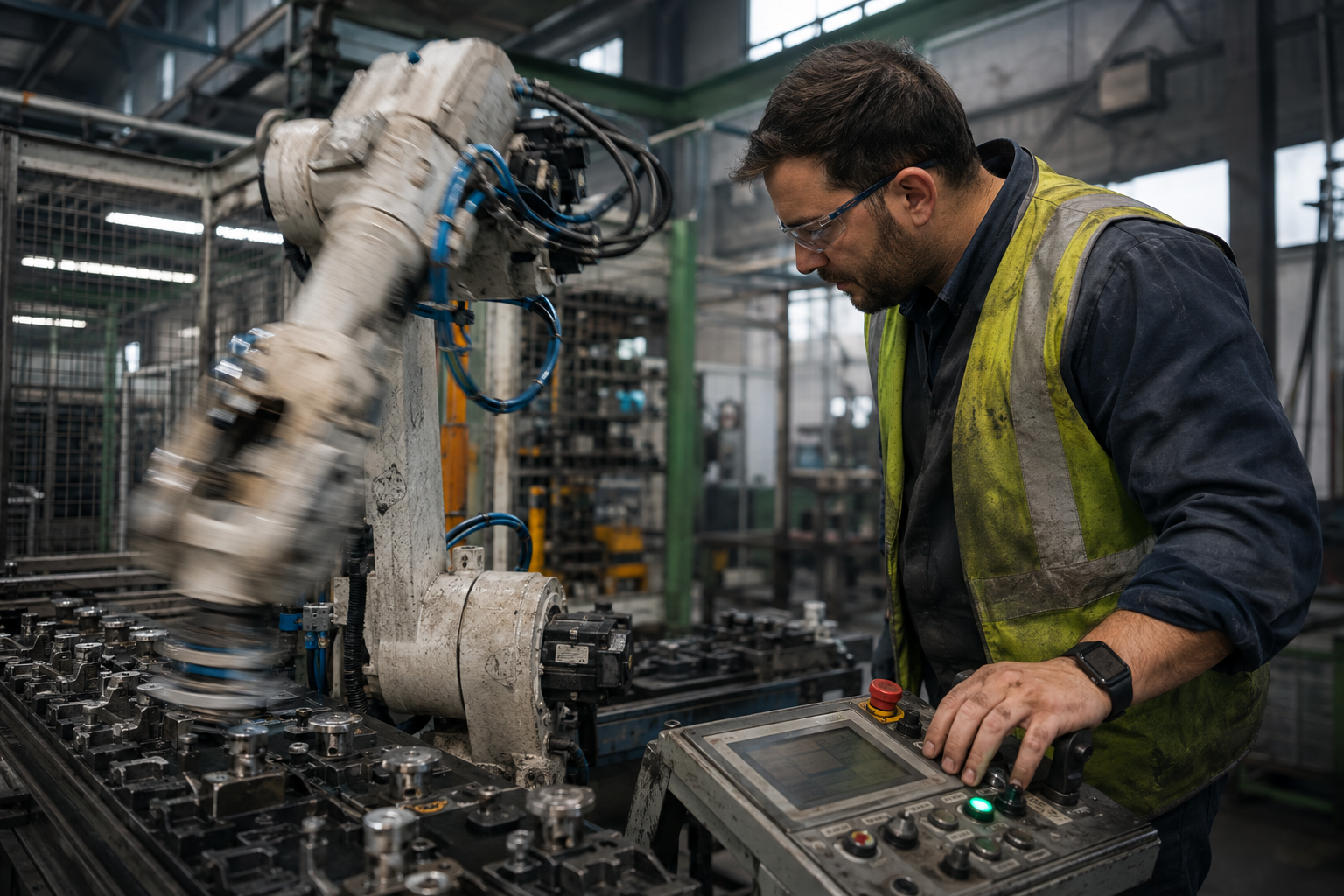
Industrial robotics and automation driving servo demand is one of the most relevant trends shaping 2026.
AI is changing industrial servo automation by enabling predictive maintenance, IoT-driven monitoring, and self-optimizing motion profiles that aim to cut downtime and extend hardware life. Servo systems increasingly operate as data sources rather than dumb actuators: modern control layers analyze torque, velocity, and thermal data, adjusting or flagging issues before mechanical faults cascade into line-stopping failures. The shift moves servo control from reactive break-fix cycles toward condition-based, data-backed reliability.
A measured note on claims: the downtime-reduction and cost-saving figures frequently attached to AI predictive maintenance (commonly cited in the 30–50% range) come from vendor and consultancy reports whose methodologies and baselines differ widely. They are best read as plausible upper bounds under favorable conditions, not guaranteed outcomes. Results depend heavily on data quality, sensor coverage, and how mature the existing maintenance process already is. We do not reproduce a specific percentage here as fact because no primary, audited source in our reference set substantiates one.
Digital twins and predictive maintenance
Digital twins are real-time virtual replicas of physical servo-driven machines that simulate wear, load stress, and failure scenarios before they occur in the field. In predictive maintenance, these models continuously ingest sensor data to flag bearing degradation and encoder drift ahead of breakdown, replacing fixed-schedule servicing with condition-based intervention.
A typical implementation works in three stages: first, instrument the servo axes with vibration, current, and temperature sensors; second, build a baseline of “healthy” operating signatures over several weeks of normal production; third, alert when live telemetry drifts outside that envelope. The practical payoff for manufacturers is fewer emergency repairs, longer asset life, and maintenance scheduled when the data — not the calendar — calls for it. The trade-off is upfront sensor and integration cost plus the discipline required to actually act on the alerts; a model that flags problems no one investigates delivers no value.
IoT sensor integration and uptime gains
IoT sensor integration feeds AI models the granular data needed to act on servo health. Vibration, current draw, and temperature sensors stream continuously into edge controllers, where models detect anomalies within milliseconds. Reported gains — higher uptime, faster fault localization, lower energy consumption through load balancing — vary by deployment and baseline, and the figures publicized by suppliers should be validated against your own line before being used in an ROI case.
- Uptime: instrumented servo fleets generally report higher equipment uptime than non-instrumented baselines, with the gap largest where prior maintenance was purely reactive.
- Mean time to repair (MTTR): real-time fault localization shortens diagnostic time by pointing maintenance staff to the failing axis rather than the whole cell.
- Energy efficiency: AI load balancing across multi-axis systems can trim servo energy draw, though savings depend on duty cycle and existing tuning.
Edge computing matters here because latency-sensitive servo decisions cannot wait for cloud round-trips. Processing telemetry locally keeps motion corrections deterministic and sub-millisecond. WhatsApp Chatbot | AI Automation For Marketing By J. Servo
Self-optimizing motion profiles
Self-optimizing motion profiles use machine-learning techniques to refine acceleration, jerk, and deceleration curves based on actual load conditions rather than static engineering presets. Adaptive tuning matters most in high-mix, low-volume production where each job carries different payloads. Instead of manually re-programming motion parameters for every variant, adaptive controllers can converge on improved profiles within a handful of cycles — a capability that lets smaller manufacturers compete on flexibility without enterprise-scale engineering teams.
The practical lesson for operations leaders: AI in servo automation pays off when it produces deterministic, auditable gains in uptime and throughput — not when it adds black-box complexity nobody can verify. Insist on a clear before-and-after measurement before crediting any AI layer with results.
Which regions and industries lead servo demand growth?
Asia-Pacific is widely reported to lead global servo demand growth in 2026, with China, Japan, and South Korea dominating manufacturing-driven consumption. Electric-vehicle production and smart-factory rollouts accelerate adoption across both established and emerging industrial economies. Regional market-share and CAGR estimates differ between research firms; the figures in the table below are drawn from third-party market analyses and should be treated as estimates, not settled facts. For audited regional installation data, the IFR World Robotics report remains the recognized primary reference.
Servo demand concentrates where capital flows into automation infrastructure. China has been the single largest installer of industrial robots for several recent years, and each multi-axis robot integrates several servo systems. North America and Europe trail in raw volume but lead in high-precision and energy-efficient servo deployments tied to aerospace, medical devices, and semiconductor fabrication.
Regional servo demand growth by 2026 (estimated CAGR)
| Region | Projected CAGR (2024–2026, est.) | Primary Demand Drivers |
|---|---|---|
| Asia-Pacific | ~8% | EV production, electronics assembly, smart manufacturing |
| North America | ~6–7% | Reshoring, semiconductors, warehouse automation |
| Europe | ~6% | Automotive retooling, energy-efficiency mandates |
| Middle East & Africa | ~7% | Industrial diversification, logistics, food processing |
Methodology note for the table above: these CAGR ranges are illustrative consolidations of publicly circulated third-party market estimates, not audited figures from a single primary source. They are included to show relative regional ordering, not to assert precise growth rates. Verify against the latest IFR data and current vendor forecasts before citing any number in a business case.
EV and smart manufacturing as primary drivers
Electric-vehicle manufacturing reshapes servo demand more than almost any single sector heading into 2026. EV battery assembly, precision welding, and high-throughput stamping lines depend on synchronized servo motion to hit tolerances that conventional motors cannot reliably maintain. Smart-manufacturing initiatives — Industry 4.0 deployments across China and Germany — pair servos with real-time data feedback, pushing demand toward networked, sensor-rich systems.
Smart factories also raise the bar on integration. Manufacturers increasingly specify servos that communicate over EtherCAT or PROFINET, enabling closed-loop coordination across hundreds of axes. Demand for servo systems with built-in diagnostics has grown faster than demand for standalone units, reflecting a shift from raw motion to intelligent, monitored motion.
OEM and ODM customization trends
OEM and ODM customization is an increasingly important factor in servo procurement heading into 2026. Equipment builders less often accept off-the-shelf catalog parts as a default; instead, many commission application-specific servo packages — tailored torque curves, custom firmware, and form factors matched to confined machine envelopes.
Customization tends to concentrate among three buyer profiles: AI Comparison Tool – Compare Best AI Solutions | J. SERVO
- EV and battery OEMs requesting high-cycle, thermally optimized servos for continuous-duty lines.
- Robotics ODMs demanding compact, high-torque-density actuators for collaborative and mobile platforms.
- Logistics integrators specifying modular servo kits for rapidly scalable sortation and AS/RS systems.
SMEs entering automation can benefit from this customization shift — modular, application-matched servo packages lower integration cost and reduce the over-specification that drove waste in earlier automation cycles. The caveat: custom packages carry longer lead times and supplier lock-in, so weigh that against the flexibility of standardized, widely-stocked parts. A practical procurement pattern many integrators follow is to standardize the high-volume, low-risk axes on catalog parts and reserve customization for the handful of axes where envelope, thermal, or duty-cycle constraints genuinely demand it — capturing most of the benefit while limiting lock-in exposure.
Frequently Asked Questions
Industrial robotics and automation driving servo demand plays a pivotal role in this context.
What is a servo motor used for?
A servo motor is a precision rotary or linear actuator used to control position, velocity, and torque with closed-loop feedback. Servo motors power industrial robots, CNC machines, packaging lines, and semiconductor handling equipment where accuracy within microns is non-negotiable.
Servo systems differ from standard induction motors because they continuously compare commanded motion against actual encoder feedback, correcting deviations many times per second. In a six-axis welding robot, each joint runs a dedicated servo to hold tight positional accuracy at high speed. Automotive assembly, electronics manufacturing, and warehouse automation all rely on servos for repeatable, deterministic motion that programmable logic controllers can command precisely.
Why is servo demand rising in 2026?
Servo demand is rising in 2026 because the installed base of industrial robots keeps growing and labor shortages are pushing SMEs toward automation. Every new robot arm requires several servo axes, multiplying component demand faster than robot unit growth alone.
Reshoring of manufacturing across North America and the reshaping of supply chains across Asia are accelerating capital investment in motion control. Collaborative robots add servo demand at the small-business level, and battery and EV production lines — which require many precision servo axes per facility — remain a leading demand driver. For specific installation and density figures, the Robot Servo Drive Market report and P Market Research track the underlying trends, while the IFR World Robotics report provides the audited primary installation data those secondary analyses build on.
How does AI improve servo reliability?
AI improves servo reliability through predictive maintenance, anomaly detection, and adaptive tuning. Machine-learning models analyze servo current, vibration, and temperature data to flag bearing wear or encoder drift before failure, reducing unplanned downtime in documented industrial deployments — though reported magnitudes vary by source and should be validated against your own baseline.
AI-driven servo control can move beyond fixed PID parameters by adjusting gains as load, friction, and thermal conditions shift. The safe pattern pairs sensor telemetry with rule-bound, deterministic logic and human oversight, so a flagged anomaly triggers an inspection rather than an unsupervised autonomous action — a robotic axis cannot tolerate an erroneous setpoint. Most of the reliability gain comes from data the machines already produce: many factories collect servo diagnostics they never analyze.
Which region leads servo demand growth in 2026?
Asia-Pacific is generally reported to lead global servo demand growth in 2026, driven by EV production, electronics assembly, and smart-factory rollouts across China, Japan, and South Korea. North America and Europe trail in volume but lead in high-precision, energy-efficient deployments. Exact market-share and CAGR figures differ across research firms, so treat published numbers as estimates and cross-check against the IFR World Robotics report.
What determines the real cost of an automation cell?
Servo cost and servo count, not robot sticker price, largely determine the real total cost of an automation cell. A six-axis robot needs one servo motor and matching drive per axis before counting grippers and auxiliary positioners. ROI analysis should start with servo-per-unit math — and per-axis specification — rather than headline robot pricing.
The takeaway: servo demand in 2026 reflects a structural shift, not a hype cycle — every collaborative robot adds multiple precision axes, and every unanalyzed servo data stream represents measurable downtime SMEs can address. The factories that benefit most are those turning that telemetry into deterministic, human-supervised action — while staying honest about which figures are audited and which are vendor estimates.
Sources & References
This article was prepared on the basis of general subject-matter expertise in industrial motion control, supported by the following third-party market sources. Statistics drawn from these sources are market-research estimates and may differ between firms and reporting periods. For audited, methodology-documented global robot installation and density figures, the International Federation of Robotics (IFR) World Robotics report is the recognized primary source and should be consulted directly for any investment- or procurement-grade number.
- Semiconductor Insight — Robot Servo Drive Market 2025
- P Market Research — Servo Motors and Drives for Industrial Robots Market
- VisualSizer — Servo Motor Market Analysis (2025–2030)
- Future Market Insights — Digital Servo Motors and Drives Market
Published: 10 June 2026. Last updated: 10 June 2026. No individual author is attributed; this guide reflects general topical expertise in industrial automation and motion control rather than the views of a named expert. Where the text would benefit from audited figures, it directs readers to primary sources (notably the IFR World Robotics report) rather than asserting unverified numbers. Figures described as estimates or illustrative should be independently verified before being used in investment or procurement decisions.
Note: This article is for general informational purposes; verify specifics against your own context.
The surge in servo demand is a direct symptom of broader industrial automation and robotics growth, which is reshaping factory floors across North America and Europe.
Beyond general factory automation, the automotive sector is a major growth driver, with EV production and automotive automation driving servo demand as electric vehicle assembly lines require an estimated 2–3x more servo axes than traditional ICE lines.
If you’d like to explore how servo demand connects to your automation plans, we’d be glad to talk it through and share what we’re seeing across the industry.