
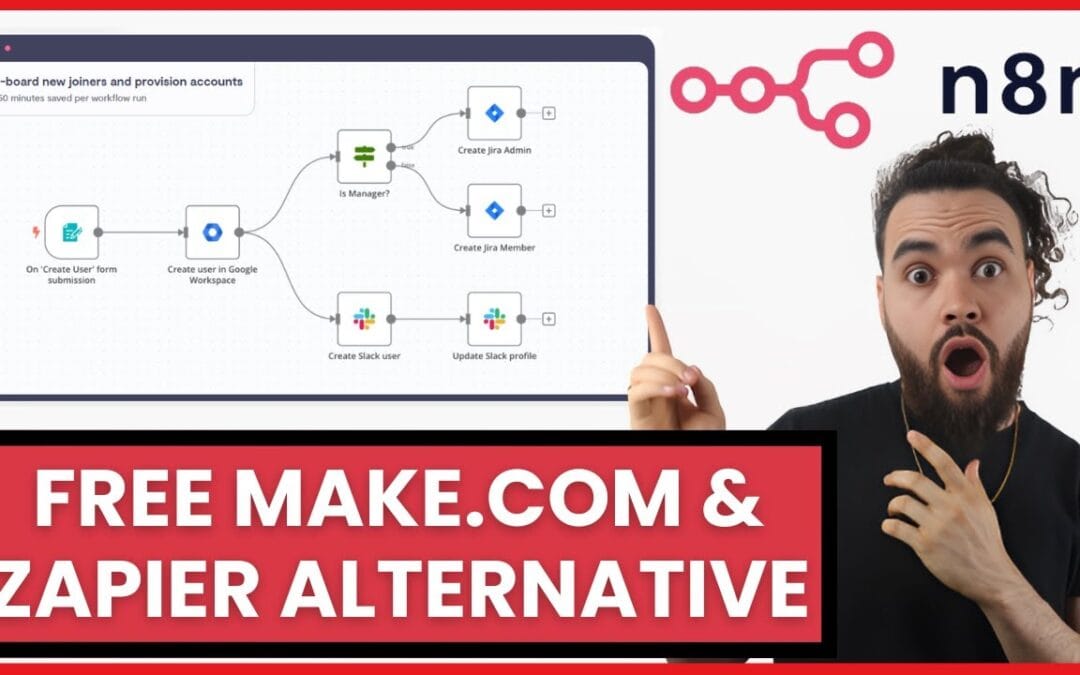
Zapier’s per-task pricing can climb steeply on its higher tiers, while a self-hosted n8n instance runs unlimited workflows on a modest VPS. If your chatbot fires tens of thousands of automation tasks a month, Zapier meters every one — a self-hosted n8n instance only needs a few gigabytes of RAM. (For current Zapier figures, always check a recent pricing breakdown against Zapier’s own pricing page before budgeting, since vendor pricing changes frequently.)
The question “how do i self-host n8n to replace zapier chat” gets asked frequently because founders watch their automation bills outpace their revenue. The chat/chatbot replacement angle is the one most guides skip over — they stop at simple Zapier-style workflows and never reach conversational AI. This guide goes further, with a transparent total-cost-of-ownership comparison rather than a $10-vs-$599 headline.
A note on methodology and honesty: the cost figures below are illustrative scenarios, not a guarantee. Vendor pricing, VPS pricing, and LLM API rates all move. Where a number comes from a published source, it is cited inline; where it is an estimate, it is labelled as one. Verify against the official Zapier pricing page and n8n’s self-hosting documentation before committing.
What Does It Mean to Self-Host n8n to Replace Zapier Chat?
Self-hosting n8n to replace Zapier chat means running the open-source n8n automation platform on your own server (usually a VPS) to power chatbot and conversational workflows — eliminating per-task fees and keeping all conversation data on infrastructure you control. n8n is a free, fair-code workflow automation tool that connects to hundreds of apps and can host AI chat agents natively. “Fair-code” is a licensing model: the source is openly available and self-hosting is free, but commercial redistribution is restricted — distinct from a permissive open-source licence like MIT.
Zapier’s “chat” features — its Chatbots product and Zapier Agents — bill on tasks and interactions. Every message a customer sends through a Zapier-powered WhatsApp or website bot can count against your monthly quota. Because Zapier publishes and revises its tiers regularly, the safest practice is to read the figure directly from Zapier’s official pricing page on the day you plan, rather than trusting any third-party number (including this article’s). Multiple self-hosting guides — for example blixamo’s 2026 n8n guide — frame the core tradeoff the same way: a metered subscription versus a flat infrastructure cost.
n8n flips the metering model. You deploy it once, point it at your own database, and run as many chat interactions as your server can handle. There are no execution caps on a self-hosted instance. The tradeoff is that you own the maintenance — patching, backups, and uptime become your responsibility, not a vendor’s.
For an SME building a customer-support bot, a lead-qualification agent, or an internal Slack assistant, this distinction is the difference between predictable infrastructure costs and a metered bill that grows with success.
Quick Summary: Key Takeaways
- Cost: Self-hosted n8n runs from a low single-digit monthly VPS fee, versus Zapier’s tiered, task-metered pricing — but factor in maintenance labour and LLM API costs (see the TCO table below).
- No execution limits: A self-hosted n8n instance handles chatbot interactions capped only by server resources, not by plan tier.
- Data privacy: All conversation logs and API credentials stay on your infrastructure — relevant for GDPR and regional data-residency requirements.
- Deployment: A working install via Docker Compose can take under 30 minutes; production hardening (SSL, PostgreSQL, backups) takes a few hours.
- Hidden cost: Self-hosting trades software fees for maintenance labour — practitioners commonly budget roughly 2–4 hours/month of admin.
- AI chat-ready: n8n’s AI Agent nodes connect to OpenAI, Anthropic Claude, and local LLMs to build real conversational agents, not just rule-based bots — though the LLM API calls carry their own per-token cost.
Last updated: June 6, 2026.
How Do I Self-Host n8n to Replace Zapier Chat in Under 30 Minutes?
Self-hosting n8n to replace Zapier chat follows seven steps: provision a VPS, install Docker, write a Compose file, set environment variables, add an Nginx reverse proxy with SSL, bring it online, and build your first chatbot workflow. A basic instance can be live in roughly 25–30 minutes; a production-ready one in a few hours.
Here is a typical deployment sequence practitioners use for chatbot infrastructure:
- Provision a VPS. Pick a provider like Hetzner, DigitalOcean, or a USA-based VPS. A 2GB RAM / 1 vCPU instance handles a moderate chatbot load comfortably. This USA VPS walkthrough covers the same Docker Compose, Nginx, SSL, and PostgreSQL stack on US-based hardware.
- Install Docker and Docker Compose. On Ubuntu 24.04, this is a handful of commands. Docker isolates n8n and makes upgrades clean.
- Write a docker-compose.yml. Define the n8n service plus a PostgreSQL container. SQLite works for testing, but PostgreSQL is strongly recommended for production reliability and concurrent chat traffic.
- Set environment variables. Configure
N8N_HOST,WEBHOOK_URL, and an encryption key. The webhook URL matters — it’s how your chatbot receives messages from WhatsApp, Telegram, or your website. - Add an Nginx reverse proxy with SSL. Use Let’s Encrypt (free) via Certbot. Chat platforms like the WhatsApp Cloud API reject non-HTTPS webhooks, so SSL isn’t optional here.
- Bring it online. Run
docker compose up -d. Open your domain, complete the n8n setup screen, and you’re in the editor. - Build your first chat workflow. Drag a Webhook trigger, connect an AI Agent node (pointed at OpenAI or Anthropic Claude), and wire a response node back to your messaging channel.
A Reproducible Docker Compose Reference
A minimal production-leaning docker-compose.yml typically looks like the structure below. Treat it as a starting template and cross-check the current keys against n8n’s official self-hosting documentation, since environment-variable names occasionally change between releases:
- Service
postgres: apostgresimage withPOSTGRES_USER,POSTGRES_PASSWORD, andPOSTGRES_DBset, plus a named volume so data survives container restarts. - Service
n8n: the officialdocker.n8n.io/n8nio/n8nimage, depending onpostgres, with these key environment variables:DB_TYPE=postgresdband the matchingDB_POSTGRESDB_HOST,DB_POSTGRESDB_USER,DB_POSTGRESDB_PASSWORDvalues.N8N_HOSTset to your domain,N8N_PROTOCOL=https, andWEBHOOK_URLset to the fullhttps://address your chat platform will call.N8N_ENCRYPTION_KEYset to a long random string — this encrypts stored credentials, so losing it means re-entering every credential.- A mounted volume for
/home/node/.n8nso configuration persists.
Because environment-variable defaults and image tags shift over time, the documentation link above is the authoritative reference — copying a stale block from a blog (including this one) is a common cause of failed first boots.
The maintainers behind n8n’s official self-hosting documentation keep current Docker Compose templates up to date as n8n ships releases. Reading the environment-variable reference before exposing anything to the public internet is strongly advised.
One honest caveat: “under 30 minutes” describes the happy path. If your DNS hasn’t propagated or your firewall blocks port 443, budget an extra hour. Practitioners report a wide spread — some teams hit every snag, others are live before their coffee cools. Plan for the former.
How Much Does Self-Hosting n8n Save Compared to Zapier Chat?
Self-hosting n8n can save SMEs a large share of automation spend once chatbot volume exceeds a few thousand tasks per month, because n8n’s cost is a flat server fee instead of Zapier’s per-task metering — but the honest comparison must include VPS, maintenance labour, and LLM API costs. The savings widen as your bot gets busier, yet the break-even depends heavily on how you value your own time.
Let’s run a worked example. Imagine a WhatsApp support bot handling 20,000 customer messages monthly, with each message triggering 3 automation steps (receive, process with AI, reply). That’s 60,000 task executions — a volume that would push a Zapier account into a high task tier.
Transparent Total-Cost-of-Ownership Comparison
The table below replaces the simplistic flat-fee comparison with a fuller picture. Zapier figures are illustrative of its published tiered model — confirm exact current prices on Zapier’s official pricing page. n8n figures include the costs self-hosting guides usually omit: the server, your labour, and the LLM API spend that an AI chatbot incurs regardless of which platform hosts it.
| Cost component | Zapier (Chat/Tasks) | Self-Hosted n8n |
|---|---|---|
| Platform / subscription | Higher metered tier required at 60k executions | $0 (software is free to self-host) |
| Server (VPS, ~2–4GB RAM) | Included in subscription | ~$10–$40/month (varies by provider) |
| Maintenance labour | $0 (vendor-managed) | ~2–4 hrs/month; at $75/hr that’s ~$150–$300/month |
| LLM API calls (AI chatbot) | Often bundled, less model choice | Pay-per-token to OpenAI/Anthropic — same regardless of host |
| Execution limit | Tiered, metered | Hardware-limited only |
| Data location | Zapier cloud | Your server |
The key insight that flat “$10 vs $599” headlines miss: at low volume, the maintenance labour can exceed the subscription you’re trying to avoid, and the LLM API bill is roughly the same on either platform because it’s charged by the model provider, not the automation tool. The genuine saving is the elimination of per-task metering at scale — which is why the gap widens as your bot gets busier, not at low volume.
Practitioners often call the per-task premium the “metering tax”: the cost of convenience once your automation actually scales. To find your own break-even, model it explicitly. A simple ROI calculator that includes server, labour, and API cost gives a far more honest answer than a single advertised number; J. SERVO’s free automation comparison tool is one option that factors in both server cost and maintenance burden.
According to cost analyses across 2026 self-hosting guides — including blixamo and usavps — the break-even for most teams lands somewhere in the low thousands of monthly tasks. Below that volume, Zapier’s lower tier may actually be cheaper once you price your own time. Above it, self-hosted n8n tends to win, with the margin growing as volume rises.
Why Is n8n Better Than Zapier for Building AI Chatbots?
n8n is well-suited to AI chatbots because its AI Agent nodes connect directly to OpenAI, Anthropic Claude, and self-hosted LLMs, support multi-step reasoning and tool-calling, and run on infrastructure you control — without per-interaction fees that penalise a busy bot. “Tool-calling” here means the LLM can invoke defined functions (e.g. a database lookup or booking action) mid-conversation rather than only returning text.
Zapier’s chatbot offering is convenient but more constrained: you work within its interface, its model choices, and its billing. n8n hands you the raw building blocks.
Inside n8n, a serious chatbot workflow can:
- Route by intent — detect whether a user wants pricing, support, or a human, then branch accordingly.
- Call tools and APIs — let the AI agent check inventory, book a meeting, or query a custom ERP in real time.
- Retain memory — store conversation context in PostgreSQL or a vector database for genuinely contextual replies. (A vector database stores text as numerical embeddings so the agent can retrieve semantically similar past messages.)
- Swap models freely — run Claude for nuanced reasoning, a faster model for latency-sensitive replies, or a local Llama model for sensitive data.
Here is where the build-it-yourself approach earns its keep. Many no-code chatbot builders tend toward what practitioners call “yes-machines” — bots that agree with everything, hallucinate confidently, and rarely say “I don’t know.” That tendency, sometimes termed AI sycophancy, can erode customer trust. Building inside n8n lets you add deterministic guardrails: validation nodes, fallback responses, and human-handoff triggers that a black-box SaaS bot makes harder to implement.
A representative pattern: a WhatsApp lead-qualification agent built on self-hosted n8n. In a typical implementation, the AI Agent node classifies inbound messages, a tool node checks a CRM, and a branching node either books a call or escalates to a human — all running for the cost of a single VPS plus the underlying LLM API calls. At high conversation volume, the same flow on a metered model would push into a far higher pricing tier. The architecture, not the marketing, drives the economics.
If you’re weighing the build-vs-buy decision, J. SERVO’s breakdown of deterministic AI agents versus probabilistic chatbots covers the reliability tradeoffs in more depth.
What Are the Hidden Costs and Risks of Self-Hosting n8n?
The hidden costs of self-hosting n8n are maintenance labour (commonly 2–4 hours/month), security responsibility (patching and credential protection), backup management, downtime risk, and the LLM API spend an AI bot incurs — all of which a managed subscription either handles or bundles. Self-hosting trades money for ownership and effort.
Many competing guides lean on a “free and easy” pitch. The honest framing is different: self-hosting is genuinely cost-effective at scale, but “free” ignores operational reality.
Here is what rarely makes the headline:
- Security patching. n8n ships frequent updates, and an exposed instance is an attack surface. Self-hosting security guidance emphasises regular updates and locked-down access; unpatched automation servers have leaked API keys.
- Backups. If your VPS dies and PostgreSQL was never backed up, your workflows and chat history vanish. Automated daily backups are non-negotiable.
- Monitoring and uptime. A self-hosted chatbot that goes down at 3 a.m. stays down until someone notices. A SaaS vendor runs a 24/7 ops team; with self-hosting you have whatever alerting you set up.
- Scaling. A 2GB VPS handles modest traffic. A viral campaign that multiplies your chat volume can overwhelm it. Production setups need n8n’s queue mode and resource headroom.
- LLM API spend. Independent of hosting, every AI response costs per-token money to the model provider. A busy bot’s API bill can dwarf the server cost — budget for it explicitly.
According to security guidance referenced in self-hosting documentation across 2026, credential exposure from misconfigured reverse proxies is among the most common self-hosting failures. The fix is straightforward — proper SSL, firewall rules, and authentication — but it requires someone who knows to apply it.
A sentiment echoed across the n8n community is that the biggest mistake teams make is treating self-hosted automation as set-and-forget infrastructure. A self-hosted n8n instance is a small server you now operate — and servers need owners.
For SMEs without a technical lead, the math sometimes flips. If self-hosting eats six hours of a founder’s month, the “savings” can evaporate against the opportunity cost of building the business. That is precisely why managed setups exist.
When Should an SME Choose Managed n8n Over DIY Self-Hosting?
Managed n8n is the right choice for an SME when it lacks in-house DevOps skills, can’t afford downtime on customer-facing chatbots, or values founder time over the marginal savings of DIY self-hosting — particularly when the team is small and no one clearly owns infrastructure.
Self-hosting is a skill, not a button. The 30-minute install is the easy 20%. The hard 80% is keeping it secure, backed up, and online for years.
You’re a strong DIY candidate if:
- Someone on your team is comfortable with Docker, SSH, and basic Linux admin.
- Your chatbot is internal or low-stakes (downtime is annoying, not catastrophic).
- You want full control and are willing to own your stack.
You should consider managed setup if:
- Your chatbot is customer-facing and revenue-critical — downtime costs sales.
- Nobody on the team wants to be paged about server health.
- You’d rather spend founder hours on product than on patching.
J. SERVO deploys hardened, self-hosted n8n instances with monitoring, automated backups, and SSL configured correctly from day one — then hands you the keys or manages it ongoing. The infrastructure remains yours; you skip the operational learning curve and the late-night fire drills. It’s the difference between buying a car and building an engine: both get you driving, but only one fits a six-week launch timeline.
If you want a structured path from Zapier to self-hosted automation, J. SERVO’s 90-day AI automation roadmap maps the migration step by step, including chatbot workflow rebuilds.
Your Actionable Migration Plan
Ready to move off Zapier chat? Here’s a no-fluff sequence to execute this week:
- Audit your Zapier chat usage. Pull your task count and monthly bill. This is your baseline savings target.
- Run the numbers. Plug your volume into an ROI model that includes VPS, maintenance, and LLM API cost — not just server cost.
- Spin up a test VPS. Deploy n8n via Docker Compose on a small instance. Don’t touch production yet.
- Rebuild one workflow. Pick your simplest chatbot flow and recreate it in n8n. Validate it end-to-end.
- Harden before launch. Add SSL, PostgreSQL, daily backups, and uptime monitoring before any customer touches it.
- Migrate incrementally. Move workflows one at a time. Keep Zapier running until n8n proves stable for two weeks.
Migrate the boring stuff first, prove reliability, then move your revenue-critical chatbot last.
Frequently Asked Questions
Can n8n fully replace Zapier chat for a customer-facing chatbot?
Yes. Self-hosted n8n can fully replace Zapier chat for customer-facing bots and adds capabilities Zapier constrains, including AI Agent nodes, multi-model support (OpenAI, Anthropic Claude, local LLMs), and conversation memory. The main requirement is proper production hardening — SSL, PostgreSQL, and backups — before going live.
How much does it cost to self-host n8n to replace Zapier chat?
Self-hosting n8n’s software is free; the real costs are a VPS (commonly $10–$40/month), 2–4 hours/month of maintenance labour, and the LLM API spend an AI bot incurs. Compared with Zapier’s task-metered plans, self-hosting tends to save most at higher volumes, while at low volume the labour can offset the saving. Confirm current Zapier prices on its official pricing page before deciding.
Is self-hosting n8n secure enough for chatbot conversation data?
Self-hosting n8n is secure for chatbot data when configured correctly — SSL via Let’s Encrypt, a firewall, authentication, and an encryption key for credentials. Because all conversation logs stay on your server, self-hosting can be more privacy-compliant than cloud SaaS for GDPR and regional data-residency requirements. Misconfigured reverse proxies are a known failure mode, so follow the security steps in n8n’s documentation.
How long does it take to self-host n8n to replace Zapier chat?
A basic n8n install via Docker Compose can take under 30 minutes. A production-ready chatbot setup with SSL, PostgreSQL, automated backups, and monitoring takes a few hours. Migrating existing Zapier workflows adds time depending on complexity — typically a day or two for a small SME.
What’s the difference between Zapier Agents and an n8n AI chatbot?
Zapier Agents run on Zapier’s cloud with metered pricing and more limited model control, while an n8n AI chatbot runs on your own server with no per-interaction fees and full freedom to choose models, add guardrails, and connect custom tools. n8n offers more control; Zapier offers more hand-holding. Note that LLM API token costs apply to AI responses on either platform.
The metered automation era is shifting. As open-source tools like n8n match and in places exceed proprietary chatbot platforms, the main reason to keep paying per task is convenience — and convenience is exactly what a good managed partner can provide without the metered bill. The honest question isn’t whether you’ll own your automation, but whether you’ll build it yourself or have it built and maintained right — with the full cost, not just the headline, in view.
Sources & References
- n8n Official Self-Hosting Documentation — authoritative Docker Compose templates and environment-variable reference.
- Stop Paying for Zapier: how to self-host n8n in Under 30 Minutes — Zapier-vs-n8n cost framing.
- n8n Complete Guide 2026 — Self-Host Your Own Zapier for Free — self-hosting, securing, and when n8n beats Zapier/Make.
- How to Self-Host n8n on a USA VPS — Docker Compose, Nginx, SSL, and PostgreSQL deployment walkthrough.
- How to Self-Host n8n: Installation, Security, Webhooks, and Remote Access — security and reverse-proxy guidance.
Note: This article is for general informational purposes; verify specifics against your own context.